
What’s your paradigm?

Most people have a worldview or paradigm through which they understand the world. When it comes to healthcare practitioners, our paradigm is often what we use to determine the underlying causes of whatever may be troubling our clients; as well as the lens through which we interpret our clients’ reactions and responses.

Paradigm is often unconscious. 

This Glass of Wine conversation is an invitation to make your paradigm conscious; to introduce the possibility that the lens through which you see yourself and your clients is just that…a lens rather than the reality.  

Sometimes we notice our paradigm when hearing an interpretation of an event that we didn’t consider or don’t agree with. I remember hearing a colleague talking about giving a Zero Balancing session in which she was having trouble finding the client’s donkey. Her interpretation was that the client was hiding and not allowing herself to be found. It was the client’s responsibility to come out of hiding. This made an impression on me because my interpretation in similar situations was entirely different. My conclusion was that it was my job to create a safe environment so the client’s donkey would want to come out. I became acutely aware of the differences in our paradigms. In her paradigm, people receiving ZB could prevent the practitioner from helping them, so the responsibility for improvement belonged to the client. In my paradigm, if something isn’t working, I haven’t figured out the best way to ZB them yet. The responsibility for improvement belongs to the practitioner. While it’s tempting to just decide that I’m right and she was wrong, it’s more interesting to entertain the possibility we both may be right sometimes…or wrong sometimes! 

I am often keenly aware of paradigm differences when a client comes in with a specific interpretation of their experience. An example is a client who believes they can’t be healthy if  their pelvis is rotated. Or a client who believes that the right side of the body is about giving and the left about receiving. Or one side of the body is masculine and the other feminine. If you find yourself saying, “yes, that’s true” or “no, that’s not true” you are expressing your own paradigm. 

A paradigm challenge can be very unsettling. For example, I once gave a ZB session to a friend who had been studying Reiki. She believed the energy had to leave the body through the hands and feet during the session. She was adamant and would not allow any work on her feet because she thought it would keep the energy from leaving. Coming from the ZB paradigm, I was concerned she would become depleted if her energy streamed out during the session. And skipping the fulcrums on the feet seemed unthinkable! At the time, I was not conscious I had a paradigm and likely neither was she. We were each coming from different realities. Our paradigms were colliding. It made it very difficult to work with her. And on her side, she didn’t really like how the ZB made her feel. How much of that was due to differences in paradigm? That’s a Glass of Wine Conversation question in and of itself!

So what’s your paradigm? How do you see health and healing? Do you see the sides of the body as being associated with something in particular? What’s your interpretation when your client isn’t improving? Have you ever found aspects of what you believe to be untrue? How does that affect you? 

I hope these thoughts stimulate some interesting Glass of Wine conversations! Thanks for reading!

Things you can do with a Half Moon Vector Part 3

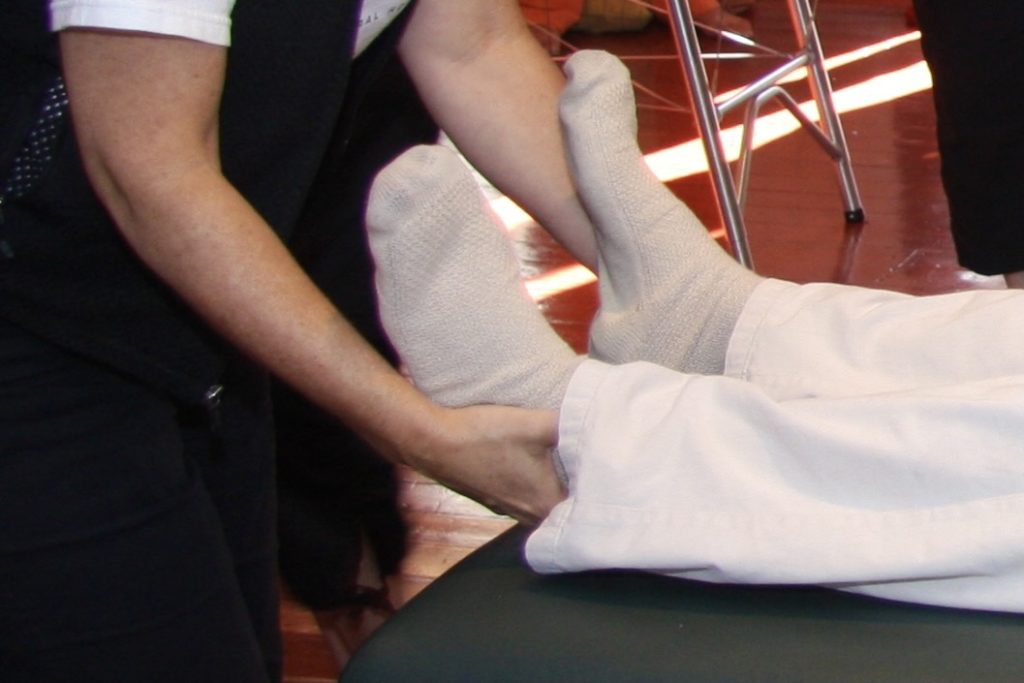
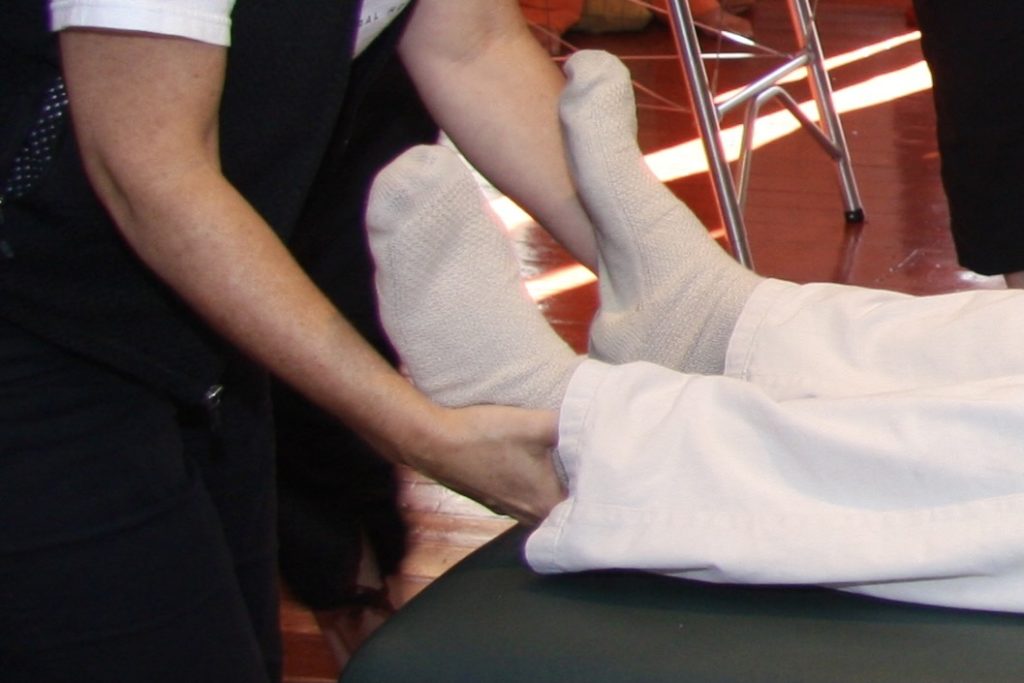
This is the third in the series of articles looking at the variety of ways we can use the Half Moon Vector (HMV) through the legs. Let’s explore… 

Using the HMV to determine if your Zero Balancing sessions are creating change that lasts. 

Many of us see clients for several sessions, usually once a week at the beginning. Often the client will be looking for help with a problem that takes more than one session to resolve. This article will focus on one way to determine whether the changes that happen during the session are temporary or lasting. [Read more.]

For this discussion, let’s define changes that last as the session “holding.” The client’s field is more organized at the end of the ZB session. Does that organization last? Is having a well-organized field becoming the client’s baseline? 

How do you obtain the information? 

Is the first HMV of this session similar to the last HMV of your previous session? This is one means of determining whether the ZB sessions are creating lasting change. 

If this is a new concept to you, start by paying attention to the changes between the first HMV of a session and the last HMV of the same session. You are likely already noticing this. Pay attention to several sessions with several clients until you are comfortable answering this simple question: “Do they feel the same or do they feel different?” If they feel different, the way the last HMV feels is more organized, because ZB creates a clearer, stronger, more organized field. Notice how the last HMV feels and name it somehow so you can recognize the feeling again. 

Once you gain comfort and confidence by noting the differences between the HMVs in the same session, try comparing the last HMV of one session to the first HMV of the following session. If they feel similar, the sessions are holding. If they feel different, it’s likely the client has reverted to where they started last session.

How can you use this information to guide your sessions? 

I use this information in several ways. Lasting change is one way to tell whether the ZB sessions are helping. If the changes are not lasting after several sessions, I may need to look at how I am working with the person. Perhaps I need to alter the length of the session or choose different fulcrums. If the changes are lasting, I’m probably on the right track. 

An example would be a client whose energetic container lacks integrity. It doesn’t hold together. If the container feels more solid at the end of one session, but more friable at the beginning of the next session, I may need to use an alchemical fulcrum to strengthen their container. 

I also use this information to determine how often a client needs to come for a session. Sometimes it takes several sessions before things start to hold. Sometimes things hold after the first few sessions. Once sessions start to hold, we can experiment with stretching the time out between sessions, to 10 days, 2 weeks, 3 weeks and so on. Clients usually want to know how often they need to come. Using this method is one way to answer their question in a more concrete way. 

How might you improve your skills?

Every week, choose one or two clients to focus on. Pay particular attention to how the HMVs feel at the beginning and ends of their sessions, as described above. Have fun and let me know how it goes!

Things you can do with a Half Moon Vector Part 2

This is the second in the series of articles looking at the variety of ways we can use the Half Moon Vector (HMV) through the legs. Let’s explore… 

How Is your client’s field organized?

This is a big topic! There are multiple signs and signals that can give you information about your client’s field. This article will focus on how available the person’s energy is.

How do you obtain the information? 

Pay attention to the weight of the client’s legs when you first pick them up. Are they too heavy? Too light? Just right?

Sometimes it’s easy to notice. You pick the client’s legs up and the weight doesn’t match the size. For example, a very small or thin person’s legs feel very heavy. Or a larger person’s legs feel very light.

Sometimes it’s the difference between the first and second HMV that gets your attention. You didn’t notice much during the first HMV, but with the second, you notice the legs seem to feel lighter or heavier. 

How can you use this information to guide your session? 

Because we know the balance between structure and energy improves as we move through the session, a change in either direction means an improvement. If the legs have become lighter, it’s likely the field was more contracted or congested during the first HMV. If the legs have become heavier, it’s likely the person was somewhat disembodied earlier in the session. In both instances, more energy has become available to the client. The client has become more available to themselves.  

Once we identify the field is contracted or the person is disembodied, we can tailor our ZB session more directly to their needs. A contracted field often responds well to a more expansive session, more energetic touch, longer fulcrums, longer pauses. Embodiment can be facilitated by a more structural touch and shorter, peppier sessions. There are also specific fulcrums that may help, such as the field fulcrums from Geometry of Healing. The acetabular field fulcrum or moving the field through the hip can encourage embodiment while fulcrums that open windows are very expansive.   

A case example: 

Many years ago I worked with a client who had suffered a severe stroke that paralyzed the left side of her body. She’d made a remarkable recovery and had regained her ability to walk. She described knowing that she was much better but still feeling paralyzed on the inside of her body. She wanted her inside experience to match her outside experience. In her first ZB session, during the first HMV, I was struck by the difference in the weight of her legs. Her left leg was way too light, while her right leg felt fairly normal. Her left side was disembodied. By the end of that session, her left leg had filled in just a little. With each subsequent ZB session, her left leg “gained weight.” And it was amazing to watch her progression! After 8 sessions, the weight of her legs felt equal and she said she felt normal, inside and outside. 

This is important. My main focus was to give her a good Core ZB, just like we learn in ZB I and II. I paid particular attention to the HMVs so I could track the changes in the growing embodiment of her left side. What I did not do is try to make her legs feel equal when I gave her an HMV. 

How might you improve your skills?

Every week, choose one or two sessions in which you pay particular attention to the weight of the client’s legs, noticing any changes between the first, second, and last HMV as well as changes across several sessions. Have fun and let me know how it goes!

What is knowing?

Have you ever wondered how, during a ZB session, you just know something? For example, you just know when to move on from a pause, or that you need to do an extra pass through the ribs? How did you know? Let’s have a cup of tea or a glass of wine together and think about this! [Read more]

Is it because we have knowledge we aren’t aware of, gained through experience? Years ago, I spent July 4th with friends, including a great little 8-year-old boy. There was a sudden thunderstorm in the early afternoon and he became distraught because he thought that meant there would be no fireworks that evening. The adults tried to comfort him by saying, “Don’t worry. The storm will be over long before the fireworks start.” His response was, “But how do you know?” 

That question made me reflect on how I did know. And I realized I knew because I’d lived through many more summers than he had and knew from experience that summer storms in Boston can come and go fairly quickly. 

So there’s an argument to be made that once you are experienced giving ZBs, there are things you may know without being consciously aware that you know. And becoming more conscious about what your experience tells you may deepen the presence and skill you bring to your ZB sessions. 

What about those times when you just know and, even with reflection, can’t put your finger on why? 

I had this type of experience once while working with a Physical Therapy home care patient. He wasn’t feeling well and although his vital signs were a little low, there didn’t seem to be anything significantly wrong. I called his doctor and his doctor agreed that things seemed OK. But something still felt off to me. Before we ended the call, the doctor asked, “What does your gut tell you?” I replied, “I think something’s very wrong.” Based on my answer, the doctor instructed the patient to go to the Emergency Room. It turned out the patient in fact had something seriously wrong and his trip to the hospital helped him receive timely and critical medical treatment. 

I don’t know how I knew. I still don’t. What I do know is I had a body-felt sense that somehow lent credence to my knowledge and helped me trust it. I still remember that feeling, although I don’t think I can describe it. I can, however, recognize it when it happens. 

So while we may not be able to figure out how we know, it may be possible to identify internal feedback signals that happen at the same time. So perhaps we can identify when we know!

Lastly, I’m curious about the beliefs we may have about this knowing. My own belief is that knowing does not elevate me or make me particularly special or skilled. I believe this type of knowing experience is available to all of us. The trick is recognizing the experience and trusting that it’s real. Keeping an open mind and waiting to see if you get any confirming feedback. I also think it’s important to focus on remaining in service so the experience is less about you and more about your client. 

Do you get a body signal when you “just know” something? Do you receive information but don’t trust it? Are you clear that you are at Interface, meaning you know what’s yours and what’s theirs? Do you have a belief that other people might have this ability but you don’t, thus disempowering yourself? Food for thought!

I hope you find this process of self-reflection worthwhile!  Let me know how it goes!

How to Talk about Zero Balancing

Clients often tell me they struggle with how to talk to people about Zero Balancing (ZB). They love receiving the sessions and want to share with friends and family but don’t know what to say. A friend asks, “How does it work?” or “What does Linda do during the session?” and my clients say they don’t know how to respond. 

Here are some tips and ideas!

First, take yourself off the hook. You can’t be expected to know what I’m doing, unless you are a Zero Balancing practitioner. And even then, you’ll miss the fun if you spend your ZB  session figuring out what I’m doing instead of relaxing and enjoying yourself. So please don’t expect yourself to be able to speak to my experience giving a ZB. 

You are, however, an expert at your own experience. No one knows your experience better than you! So start there. Your authenticity is a powerful communication tool. 

You may wonder how sharing your own experience can answer your friend’s questions. 

Think about what your friend may actually be asking when they ask how ZB works. Most of us are interested in some basic information when considering bodywork sessions for the first time or with a new practitioner. It’s normal to want to know: Will it feel good? Will it help me? Will I be safe? 

These are universal human concerns and are, quite possibly, what you yourself wondered before you tried Zero Balancing. Often, we are not fully aware of these specific concerns. So we ask what it is or how it works. Or we ask if it’s similar to something we already know about. 

When a potential new client asks me what Zero Balancing is or how it works, I answer their spoken question and also the unspoken questions listed above. By talking about how ZB may help, how good it feels, how experienced I am, and how much care I bring to each session, I am hopefully answering both the spoken and unspoken questions. 

When you share your own experience, you may be answering the unspoken questions and possibly the most important questions. You are sharing that it feels good, that it’s helping you, that you feel safe. 

So what details might you share about your own experience? 

One possibility is to share how you feel during the session. You are lying on a soft and comfortable treatment table. How does my touch feel to you? Good? Safe? Gentle? Comforting? Calming? 

Another option is to think about how you feel when you first sit up after a ZB session. When you first stand up. After you’ve walked a bit. Now see if you can come up with a few words that describe how you feel. Here are some words clients have used to describe how they feel  after a ZB session: 

Grounded. Light. Less pain. No pain. Calm. Taller. Serene. Clear. Happy. Better. 

Do any of these words fit your experience? If not, perhaps there are other descriptions you can share about Zero Balancing. 

Are the sessions helping you? Without sharing personal details about why you are receiving Zero Balancing, you can describe ways you know the sessions are helping you. For example: “My pain is better.” “I’ve been able to get back to gardening.” “I’ve started writing again.” “I’m more relaxed.”

Lastly, you can refer your friend or family member to my website Lindawobeskya.com for descriptions of how I work and links to a podcast and articles on Zero Balancing click here. Another resource is the Zero Balancing website click here for more information. There are 2 excellent books on Zero Balancing. Inner Bridges by Dr. Fritz Smith, the developer of ZB, and Zero Balancing by John Hamwee.

Balance Change

How’s your life going these days? Does managing change feel like a balancing act? We might all recognize that feeling of being off balance initially when something changes in our lives. And given the numerous changes over the past year, feeling off balance has become a way of life for many of us. If we view changes in our lives through the lens of Zero Balancing, any occurrence that creates change is a fulcrum.  In a Zero Balancing session, each technique you experience is a fulcrum. What happens when you receive a fulcrum? As the practitioner, every technique I use is called a fulcrum. I create a fulcrum by applying traction to your legs or gentle pressure on your ribs. And then I stay still. Because the default of the body is motion, your body responds by changing and reorganizing around my stillness. You go into what is called a working state. The pattern that existed before the fulcrum has been affected and is shifting. You are in process, in movement. The process you are experiencing is inherently unstable because things are moving and changing. My job as a practitioner is to stay grounded, stable and present with you, while not attempting to influence or help your process. Your body knows just what to do and will, over the next several hours, naturally move to its highest state of health. The best course for each of us to follow is to witness what’s going on and to allow the process to naturally progress.  

Taking a broader view, any change can be seen as a fulcrum. Think about a time when things changed in your life. It might have been a change initiated by you, a change initiated by another that affects you, or a change initiated by a societal or external event. Perhaps you got a new job or started or ended a relationship. Or perhaps several things changed at once, such as the world entering a global pandemic. Think about how “in motion” things felt, how your life changed, evolved, and finally settled down into a new pattern. You went into a working state and perhaps are still in a working state, as so many of us are with regard to the pandemic. If you can identify this and can name it, the process can be easier to navigate. Expecting yourself to feel unaffected by big fulcrums is unrealistic. It’s natural to go into a working state, to feel in motion, to feel less stable, after a big fulcrum. 

Even though the experience of change and evolution during a working state is normal, it may still be a very challenging time!! How do we navigate the period of instability that naturally occurs after a fulcrum? Imagine standing waist-deep in the ocean. There’s a way that we can learn to ride out being in flux, responding to external forces, and keeping our balance on an unstable surface. 

If you find your life has gone into a working state, Zero Balancing sessions can help! Each ZB session helps to ground and center you. Multiple sessions over time help to build a deeper stability so when things get rocky, your world doesn’t get rocked so deeply. When faced with big life events, such as the pandemic, job changes, marriages and divorces, or other life transitions, recognizing you are in a working state can change your perspective. Zero Balancing sessions can help you with grounding, centering and stability so you can ride the wave until your life settles into its new pattern.  

Things You Can Do With A Half Moon Vector

This is the first in a series of articles looking at the variety of ways we can use a Half Moon Vector (HMV) through the legs. Each article will introduce one thing you might want to explore, the signals to watch and feel for, why it might be helpful, and an example from my own experience with clients. 

In this first article, let’s explore… 

Does the client’s energy move quickly or slowly?

This is one of the first things I focus on when I’m getting to know a new client. I often use it to guide some of my decisions for the remainder of that first session as well as for subsequent sessions. It may be that the client’s energy moves neither quickly or slowly but somewhere in between. In this case, I likely won’t modify the session based on this criteria.

How do you obtain the information? 

Once you have the first HMV in place, shift your attention to feedback signals that indicate your client’s energetic response. How long does it take to see a working sign? Do you see one at all? What do you feel in your hands? 

If you see a working sign almost immediately, it likely means your client’s energy moves quickly. With clients like this, you may even notice a deep breath during the sitting assessment. If it takes a long time to see a working sign or you don’t see a working sign, it’s possible the client’s energy moves slowly. 

Focussing on what you feel in your hands, if energy starts to come into your hands almost immediately, this indicates, as you might surmise, the client’s energy moves quickly. Conversely, if you feel that nothing is happening or maybe sense just a little movement as you are completing the fulcrum, this indicates a slower energetic response. 

It’s important to note that energy that moves quickly is no better or worse than energy that moves slowly. It would be like saying blue eyes are better than brown eyes. It’s simply an aspect of your client’s world that can be helpful to pay attention to. And don’t forget, every client is unique so you may have clients that don’t fall neatly into either category. 

How can you use this information to guide your session? 

There are several means available. Here are a few to try: modify the length and pace of your session as well as using a more structural or more energetic touch. You can also make use of fulcrums that add compression or change the direction of your rib fulcrums to increase containment or expansion. 

Clients whose energy moves quickly frequently benefit from shorter sessions without long pauses. Usually a structural touch feels better to this client and is more helpful. These clients may also be very sensitive and they may deplete easily. A shorter, brisker session with lots of structure can help because it contains their energy and can help them to feel their edges. Fulcrums that utilize compression and increase containment are usually very helpful as well. 

Conversely, clients whose energetic response is slower may do better with slower sessions, slower fulcrums, more and/or longer pauses and a more energetic touch. Angling your rib fulcrums to increase expansion can also be very helpful. Compression fulcrums are not usually helpful, although may be with particular clients. 

A case example: 

I had a client several years ago whose energy moved very slowly. I didn’t pick up on this right away. She had come to me for help with hip pain. I found the acetabular field in her painful hip a bit thin, so I used the bubblegum fulcrum from Geometry of Healing. Compression. She came in for the next session in more pain. Looking back, had I paid more attention to how her energy moved, I might not have chosen that fulcrum even though my evaluation indicated a need for it. She turned out to be a client that taught me a lot about working with slower moving energy. As our work together progressed, I used more energetic touch, performed fulcrums more slowly and added more and longer pauses. As I modified my sessions, she did better and better. 

How might you improve your skills?

Every week, choose one or two clients to practice this with. You may already have someone in mind!  Try adapting your sessions and see what happens. You’ll be surprised at how quickly you master this aspect of Half Moon Vectors. Have fun and let me know how it goes!

In the next issue, we’ll look at using the beginning of the ZB session to get a sense of how well your client’s field is organized. Stay tuned!

Highest Personal Regard and Compassion

Have you ever wondered about the difference between compassion and highest personal regard? Is there a difference? Let’s have a cup of tea or a glass of wine together and think about this!

The focus of this conversation is to look at what highest personal regard and compassion means to each of us and where each comes into play in our everyday lives. There may be no definitive answers; just hopefully intriguing questions applied to our own personal experiences. 

I began wondering about this one day when leading a pyramid meditation. I noticed the body- felt-sense I had when feeling high personal regard for myself and others. And I noticed the body-felt-sense I had when connecting with compassion while pausing in the heart chakra. They weren’t the same and I wondered about that. 

Over the years, like so many of us in the Zero Balancing community, I’ve strived to embody the principle of high personal regard, to live the practice with my students, clients, colleagues, family and friends. It’s the way I approach meeting anyone new. It’s the way I’d like to be approached. My high personal regard is theirs to lose. 

Repeating that last sentence: my high personal regard is theirs to lose. Can one lose this? Are there times when it’s not possible to hold someone with highest personal regard, without judgement or comparison as it’s described in the Core ZB Study Guide? 

What if someone hurts you? What if someone is intentionally aggressive and seeks to cause harm? Are they deserving of high regard? 

Here’s another scenario…If your intent is to hold someone with high regard, but your instinct, your donkey, is sending out warning signals, which should hold sway? Do you ignore your instinct in favor of the idea of high regard? Is high regard the same as trusting someone? 

Now let’s look at compassion and ask the same questions: can someone lose your compassion for them? Are there times when it’s not possible to have compassion for someone? If they’ve hurt you are or are causing harm intentionally? Does having compassion mean trusting someone? Ignoring your instinct? 

Here are the results of my own pondering of these questions: Compassion and High Personal Regard are not the same. Certainly not the same on a visceral level for me. Can someone lose my high personal regard? 

I will apply this question to a specific situation in which someone was unfortunately aggressive and unkind toward me. Did my donkey send out warning signals? Yes. Did I override those warning signals? I’d say it took me awhile to recognize the warning signals and once I did, I listened. And yes, I met this person and held them in high regard and, if I’m honest with myself and with you, I can say they did lose my respect and high personal regard. I felt some shame about that; like I had somehow fallen short. I believed that if I was more evolved and embodied high regard better, I could manage to still hold them in high esteem despite their behavior. When I look back from this vantage point, I’m not so sure that’s true and… that’s how I felt at the time. 

However, when it came to compassion, they could not lose my compassion. When I connected with their true being, underneath the hurtful behavior, I could feel the depth of their suffering and felt and still feel deep compassion for them. In fact, it was by connecting with compassion that I was able to forgive them, free myself, and move on.  

I hope you find this process of investigation worthwhile!  Let me know your thoughts! 

TLC and the Pain Control Toolbox

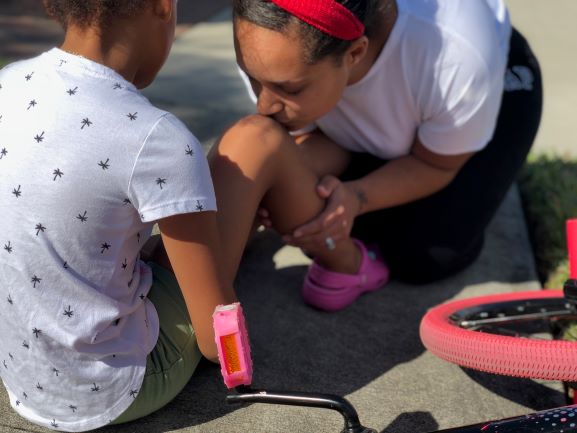
Remember when you were a child and you fell down and skinned your knee? After your knee was cleaned up and the bandaid applied, the thing that helped the most was Mommy or Daddy kissing it and making it better. That tender, loving care, the TLC, felt like the magic potion that healed the pain. 

As we grow into adults and experience a skinned knee or worse, we often forget about the magic potion, the TLC. But it hasn’t lost its power. 

In my many years of practice as a Physical Therapist and Zero Balancing practitioner, I’ve worked with hundreds of people who are in pain. Some for a few months and some for several years. And I’ve observed, without exception, that when clients consciously choose self-care and pain management, a healing event has occurred. The trajectory of their healing path changes and moves upward towards well-being. This self-administered TLC has the same curative power as the kiss your knee received as a child. 

What’s the explanation for this phenomenon? This is my hypothesis: the TLC, the attention and care in response to pain, changes the energetics of the situation. Let me explain. As a Zero Balancing practitioner, I see people as consisting of both structure and energy. The structure is everything in the body that can be seen, like bones and muscles and blood. The energy is everything in the body that is unseen, like thoughts and memories and vitality. Structural issues are usually the focus of western medicine and energetic issues are usually the focus of eastern medicine. Zero Balancing bridges western and eastern medical thought by addressing the relationship between your structure and your energy, by seeing people as both structure and energy. From this perspective, when you skinned your knee as a child, your structure was injured. Your skin was abraded, you bled, your nerve endings signaled injury and pain to your brain. The kiss, the TLC, was an energetic exchange. The love conveyed by the kiss was as necessary to your healing process as cleaning and covering the wound. 

It’s been my observation that as adults, we often forget about the TLC, this energetic aspect of healing. Or we think to offer it to others but not to ourselves. Some introspection may reveal why the value of self-TLC has fallen through the cracks. I suspect the reasons are as individual as each of us. And if you’re in miserable pain, the “whys” are less important than the alleviation of your suffering. What’s important is adding the TLC component to the treatment approach.  

This is one reason I work closely with my clients to help them create a Pain Control toolbox.  The toolbox we are most familiar with is the one in the garage or utility closet. It may contain a hammer and a screwdriver and a variety of other tools. Often the garage toolbox gets filled as the needs arise. You want to hang a picture so you buy a hammer.

A Pain Control toolbox is analogous to the toolbox in your garage to some extent. When pain occurs, most of us have not bought the tools ahead of time. It’s human nature. Many of us do nothing, hoping the pain will just go away. That’s human nature too. 

And sometimes the pain does just go away. That’s great! If it doesn’t, we may search the Internet or ask a doctor or PT what the best medication would be, or whether heat or ice is better. We are looking for tools. From my perspective, even this act of seeking tools to help the pain is TLC. So you have already started the magic. 

Another aspect of the TLC is filling your Pain Control toolbox with tools you like. While simple, this is a powerful statement. Think about the last time you felt cared for by someone. It’s likely they said or did something you liked. If you put a heating pad on a sore back muscle, on a structural level, the heat may help the muscle to relax. If you really like heat and feel comfy and warm in a comfortable chair with the heating pad, it seems to work even better. That, along with the fact that you thought to use a heating pad, and gave yourself the time, is the TLC part. You helped both your structure and your energy. You helped all the parts of yourself. 

The next article will contain ideas and strategies for creating your own Pain Control toolbox. In the meantime, you don’t have to wait to get started. Look around your home and identify the tools you tend to use most often when you’re in pain. These are already in your toolbox. If this article has made you realize you don’t do much for yourself when in pain, you are not alone! And it’s never too late. Search the internet or ask a healthcare professional for some suggestions and try a few things out. Remember, the act of seeking pain remedies is self-TLC. When you find something you like, even if it helps just a little, you’ve started your toolbox. 

The Value of the Pyramid and Parallel Breath Meditations

Have you ever had an experience that has upset you? Or felt anxious about an upcoming academic or medical test or procedure? Or felt stressed about a loved one’s health or the COVID-19 pandemic? If you’re like most of us, the answer is yes, yes, and yes. And you are not alone! 

Like you, I’ve experienced those feelings many, many times. After an upsetting experience, I might find myself feeling agitated for several hours. I may feel uneasy or worried for several days preceding a medical exam or procedure. And the stress of the pandemic has become a constant, always in the background and often front and center. 

Among the many stress management tools available, I have found the Pyramid and Parallel Breath meditations to be particularly helpful because they are both so effective and, once learned, are easy and don’t take a lot of time to do. 

I first experienced both meditations while taking a Zero Balancing (ZB) class. The ZB class started, and still starts, each day with creating a Pyramid and breathing Parallel Breaths. Sitting quietly and guided by the teacher, these meditations helped me feel more present, attentive and enlivened, which enhanced my class experience and made learning easier and lots of fun. I’ve often had helpful insights about myself or my Zero Balancing practice during these meditation sessions. Once I learned how to do these meditations, I realized I could use them on my own outside of class, individually or together, to help me in a number of different situations. 

For example, the Parallel Breath meditation helped me many years ago when I worked as a Home Care Physical Therapist. I had been assigned a new patient and was to begin his treatment in his home. About 5 minutes into the Physical Therapy evaluation process, I asked him if he had any pain. This was a standard question asked of all new patients. In response, he began to yell at me. He got up and walked through his house for about 15 minutes, screaming at me the whole time about his dissatisfaction with his prior medical care. While I knew his anger wasn’t personal and my heart went out to him for his frustration and pain, it was very upsetting to be on the receiving end of all that rage. I was still shaken when I returned to my car. My next patient appointment was in 15 minutes and I needed to compose myself. So I sat there in my car and breathed Parallel Breaths for about 3 minutes. It helped me to quiet and organize myself internally so I could drive safely and be professional, calm and caring with my next patient. 

The everyday usefulness of the Pyramid meditation was demonstrated many years ago when I taught a course on Complementary Medicine to graduate Physical Therapy and Nursing students at Simmons College in Boston, MA. Because the 3-hour lecture took place at 5pm on Wednesday evenings, the students in these arduous training programs usually arrived tired from a long day in the middle of a week of long days. I began each class with a Pyramid meditation. As we moved through the meditation, I could feel the environment in the room shift. Many students told me how much they looked forward to the meditation each week, how it calmed and focussed them, and especially helped them midweek. One of the students shared that when she spent her weekends at her parents’ small, family-filled, noisy city apartment, she created a pyramid over her desk to help her focus on her studies. And it worked! 

I also use the Pyramid meditation when I’m hoping an upcoming event will go smoothly or successfully. I create a pyramid over my experience prior to travelling, either the night before or the morning of. I invite in all those things I think would be helpful, such as a well-rested and alert airplane pilot, kind fellow passengers, a smooth experience going through security, arriving at my destination with all my luggage. Likewise, I create a pyramid over my Zero Balancing class the night before I teach as well as before the ZB classes I take. I’ve created pyramids for friends, family, students and clients, at their request, prior to surgeries, medical procedures, the GMATs, whatever they may feel anxious about. 

Would all these events go smoothly without a pyramid meditation? I don’t know. I do know that creating a pyramid in these instances helped me to feel better in the moment, conveyed my caring in a concrete way to others, and most often, the desired outcomes occurred. As my grandmother used to say…”It couldn’t hurt!” 
Are you curious to experience a pyramid and parallel breath meditation? Information about weekly live guided meditations as well as recordings of past meditations are here. Join us! 

Linda Wobeskya, MSPT