The most frequent remark I hear after a Zero Balancing (ZB) session is, “I feel so relaxed!” Why is ZB so relaxing? ZB incorporates several elements that create an experience of safety which in turn, quiets our fight-or-flight response. Dr. Stephen Porges, a leading researcher on the effects of stress and trauma on the nervous system, emphasizes the necessity of establishing safety for the nervous system to regain balance. In his article, Polyvagal Theory: A Science of Safety he stresses the importance of safety for healing, growth, and healthy social interactions. The continuous interplay between fight-or-flight reactions to threat and relaxation responses when safe is regulated by our autonomic nervous system. How exactly does ZB heighten these feelings of safety?
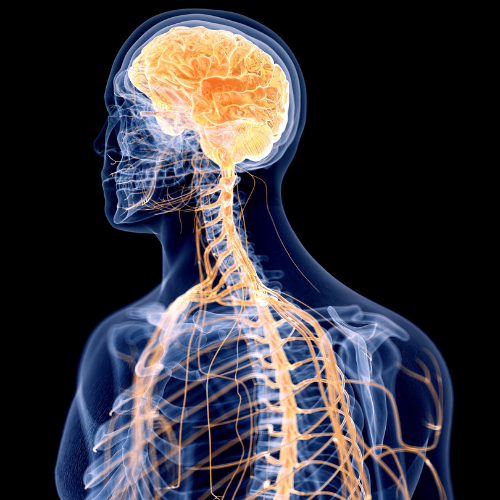
When we think of the nervous system, we often think of the voluntary, or somatic, nervous system, which allows us to sense and interact with our surroundings—for example, when you intentionally wiggle your toe. However, vital functions—like your heartbeat, the movement of food through your digestive tract, and blood pressure regulation—are managed by the involuntary, or autonomic, nervous system.
The autonomic nervous system consists of two parts: the sympathetic fight-or-flight and the parasympathetic rest-and-digest systems. The ideal state is a balance where these two systems activate as necessary and then return to equilibrium.
When we perceive a threat, whether real or imagined, the sympathetic nervous system immediately jumps into action, preparing us for survival by revving us up to either fight or flee. Once the threat is gone, the parasympathetic nervous system steps in to restore balance.
With trauma or prolonged stress, the sympathetic nervous system can get stuck in the “on” position which prevents the parasympathetic nervous system from effectively promoting calm. Establishing a sense of safety is crucial because it removes the stimulus that keeps triggering the sympathetic nervous system, allowing the parasympathetic nervous system to perform its regulatory function.
Every Zero Balancing (ZB) session is designed with features that cultivate a profound sense of safety, beginning with the unique quality of ZB touch. ZB practitioners receive extensive training to consciously and simultaneously connect with the whole person—both the physical body and the individual living within it. Recognizing that each person, while structurally similar, is a unique being, ZB touch meets you exactly where you reside in your body. This creates an experience of being fully seen and held with deep respect, free from any practitioner-held expectations about how, when, or how much you should change. The session offers a feeling of complete acceptance and non-judgment.
Second, Zero Balancing touch maintains a clear boundary, which is vital for respecting the client’s personal space. This distinct boundary is particularly crucial for individuals with a history of trauma. Communication through touch is instantaneous and always true. When conscious, respectful touch connects with our deepest selves with a clear boundary, we feel seen, met, and accepted. Instinctively, we know we are safe and can relax.
Lastly, Zero Balancing sessions follow a protocol. Every session follows the same pattern using primarily the same techniques. After a few sessions, the client knows what to expect. This predictability decreases the need to monitor the practitioner or stay guarded, freeing the client’s attention to turn inward and relax.
In this environment of safety, the client’s sympathetic nervous system has a chance to down-regulate. Pilot studies performed by the Neurosynchrony Institute have demonstrated this phenomenon. To read these studies go to Pilot Study with Neuro Synchrony Institute (2015 & 2017) – Zero Balancing Touch