In today’s often stressful and uncertain world, personal anxieties are easily amplified. Whether it’s concerns about a medical test, a loved one’s health, or job pressures, these feelings are common and understandable. This was true when this blog post was initially written during the pandemic, and it remains equally relevant now. If you’re experiencing such emotions, know that you’re not alone. Among the many available stress management techniques, I’ve personally discovered the Pyramid and Parallel Breath meditations to be remarkably effective. They are straightforward to learn, require minimal time, and can be practiced in nearly any setting.
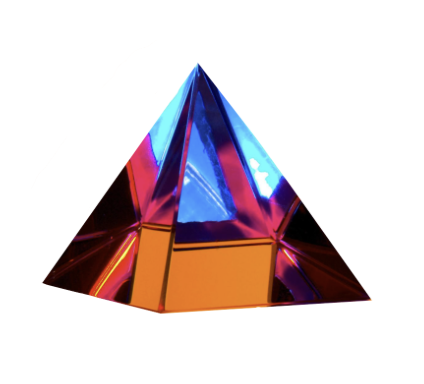
I learned both meditations while taking Zero Balancing (ZB) classes. Each day the class began with creating a Pyramid and breathing Parallel Breaths. Sitting quietly and guided by the teacher, these meditations helped me feel more present, attentive and enlivened, which enhanced my class experience and made learning easier and lots of fun. Once I learned how to do these meditations, I realized I could use them on my own outside of class, individually or together, to help me in a number of different situations.
The Parallel Breath meditation proved invaluable during my time as a Home Care Physical Therapist. I recall one instance where a new patient began shouting about five minutes into our session, expressing his dissatisfaction with prior medical care. Although I understood his anger wasn’t directed at me personally, being the recipient of such rage was incredibly unsettling. Still shaken after returning to my car, and with my next appointment in just 15 minutes, I needed to compose myself. I sat and practiced Parallel Breaths for about three minutes. This helped me to quiet and organize myself internally, allowing me to drive safely and approach my next patient with professionalism, calm, and care.
The usefulness of the Pyramid meditation was evident when I taught a Complementary Medicine course to graduate Physical Therapy and Nursing students at Simmons College in Boston, MA. These demanding programs meant students often arrived tired at the 5 pm Wednesday evening lectures. I started each three-hour class with a Pyramid meditation, and I could feel the atmosphere in the room change. Many students expressed how much they anticipated this weekly meditation, finding it calming and focusing, particularly mid-week. One student even shared how she created a pyramid over her desk to concentrate on her studies during noisy weekends at her parents’ city apartment and it proved effective.
I use the Pyramid and Parallel Breath meditations to promote smooth and successful outcomes for upcoming events. For instance, before traveling, teaching, or undergoing a medical procedure, I create a pyramid over the experience and invite in beneficial elements.
When traveling, I visualize a well-rested pilot, kind fellow passengers, an efficient security process, and my luggage arriving safely. Similarly, I create a pyramid over my Zero Balancing classes the night before I teach, and also before I attend ZB classes, envisioning safe, stimulating and inspiring environments that optimize learning.
I have also created pyramids for friends, family, students, and clients, at their request, to alleviate anxiety related to surgeries, medical procedures, GMATs, or other stressful situations.
Would all these events go smoothly without a pyramid meditation? I don’t know. I do know that creating a pyramid in these instances helped me to feel better in the moment, conveyed my caring in a concrete way to others, and most often, the desired outcomes occurred. As my grandmother used to say…”It couldn’t hurt!”
Are you curious to experience a pyramid and parallel breath meditation? Recordings are available here. Try it!