
Category Archives: Clients

Why Can’t I Stick to My Exercise Program? PART 1: Try This exercise!

Most of us are aware of the importance of regular exercise. We are surrounded by research and advice on how much to exercise, when to exercise, the best types of exercise. But how can you determine the best ways for you to exercise and how to stick to these exercises? To begin, here is an inescapable fact about exercise…the only exercises that work are the ones that you will actually do! So before looking at exercise research and medical advice, it may be helpful to try this exercise in discovering your personal definition of “the best exercise.”

Here is the exercise: investigate your relationship with exercise. Investigate your beliefs about exercise. Be honest with yourself. Many people have preconceived notions about what exercise should entail. It can be helpful to notice any thoughts with the word “should” and to put those thoughts aside. Just for now. Explore who you are with self-acceptance, without judgment. 

Here are the questions: 

Do you like to exercise? If the answer is yes, what type(s) of exercise do you like? If the answer is no, as is common for many people, can you identify what you dislike? Be as specific as possible. If you dislike exercise, what might make it more palatable?  

Where do you like to exercise? Do you like going to the gym? Hate going to the gym? Love swimming? Hate getting wet? Do you prefer taking a class or working privately with a trainer? What about following an exercise video at home in your living room? Would you rather be indoors or outdoors?  

What time of day works best for you? Before your day gets started? Or perhaps after getting home from work? 

How much time are you able to spend exercising? Note the wording. How much time are you able to spend, not how much time you think you should spend exercising. 

What do you hope to achieve by exercising? What are your goals? Perhaps weight loss, improved muscle strength, flexibility or tone? Increased well-being? Decreased stress? 

How will you know you have reached your goal? This is an important and often overlooked question. Try to make your goals specific. For example, being able to walk two miles. If your goal is to feel less stressed, how much is “less stressed”? What specifically does “less stressed” feel like? The Visual Analog Scale, also known as the pain scale or VAS, has been shown to be quite accurate; meaning that if you feel your pain is a 5 on the scale of 1 to 10, your “5” is quite consistent within yourself. You can use the same method to measure your stress. Even measuring stress as small, medium, or large can be helpful. 

At the end of this exercise on exercising, you should have some information about yourself that will help you to determine your next step toward developing a successful exercise habit. For example, you may discover you like exercise if it’s outdoors in the early morning; that you can realistically spend 20 minutes 3 times a week exercising; that your goals are to lose 20 pounds and to be able to walk 2 miles. Or you may have discovered that you don’t like exercising but are willing to endure it for 10 minutes every day as long as you can remain seated. Your goal is to decrease your blood pressure medication. 

Part 2 will discuss creating an exercise program based on what you learned about your relationship to exercise. Look for it in the Winter 2023 newsletter coming this December. I hope you enjoy your process of self-discovery!
Get in the Habit: Clearing Obstacles to Starting an Exercise Program. 

Did you know that people tend to exercise less in the winter months? Is this true for you? Spring is here and the increasingly warm weather may be just the thing to help you to start a new habit: regular exercise.

How many of us have…

…joined a gym, thinking the monthly fee will motivate us to exercise regularly? 

…decided to exercise every day for an hour but never seemed to get around to doing it?

…decided the reason we aren’t exercising is because we are lazy or unmotivated or too busy? 

Perhaps the reason for our lack of success has more to do with human nature than motivation or get-up-and-go. What if we look at getting more exercise as creating a new habit?

There has been a lot of research recently about habits: how powerful they are, how to break bad ones and start good ones. So, what is a habit? For our discussion, let’s define habit as an action required through repetition. Actions we consistently repeat become habits. If we exercise consistently, it will become a habitual part of our daily life. 

Sounds simple. 

But if it’s so simple, why is it so hard? Let’s look at some potential obstacles.

For one, we tend to create exercise goals without considering whether the goals are achievable. Or we may choose exercise based on what we’ve read about what doctors say we should be doing. We don’t consider our likes, dislikes, and the real constraints of daily life. For example, clients often come to me for help going to the gym more frequently. Yet when I ask them if they like the gym, they respond, “I hate going to the gym.” or “I hate to exercise.” Similarly, someone may decide to exercise every morning before work yet hate getting up early. It’s not hard to see both approaches heading toward failure. 

So, just for now, put aside what you’ve read or what you’ve always thought you should be doing with regard to exercise. Instead, as a first step, spend a few weeks observing yourself and making a list of what types of exercise you like. Be honest with yourself about what you enjoy and don’t enjoy. What time of day do you feel energized? When in your daily schedule are you most likely to consistently have time to exercise? How much time can you realistically spend exercising? Where do you like to exercise? If you prefer exercising at home, where in your house or apartment are you most comfortable? 

Each aspect you list should be true and aligned with your nature. Be relentlessly honest with yourself and fully accept who you are. 

Remember that the only exercise that works is the exercise you will actually do! All the “best exercise” information in the world won’t help you if you won’t do it. I once had a client who was honest enough to state she was only willing to exercise during the commercials when she watched the nightly news. I gave her an exercise program that matched her willingness and she did her exercises every night. 

It’s unlikely you will consistently exercise if you don’t enjoy it or can’t get to it because it doesn’t align with your daily rhythms or busy lifestyle. If you hate the gym but love walking in your neighborhood, take walks in your neighborhood. If you like lifting weights but don’t have more than 10 minutes per day to exercise, lift weights for 10 minutes. Try it!

A ZB Perspective for Your Life

In an earlier newsletter, I introduced the idea that Zero Balancing (ZB) principles can help you in your daily life. It can be so helpful it’s worth a deeper look. Specifically, how using the Zero Balancing concept of fulcrums and working states can deepen your understanding of normal responses to change, especially ongoing change like the pandemic.

To review, the term “fulcrum” is used to describe each technique used during a ZB session. A fulcrum creates an opportunity for movement, in much the same way an otherwise stationary board becomes a lever by placing it on a fulcrum. When your ZB practitioner places a fulcrum and holds it for a few seconds, your system responds by going into motion. Your internal world starts to reorganize and change in response to the stillness in the practitioner. This process is called a working state. It’s an in-between state; in between the patterns you had before the fulcrum and the new patterns that have not yet formed. Each fulcrum, working state and new pattern are part of an organic, holistic process that naturally moves you toward a higher state of health. 

Outside the context of a Zero Balancing session, a new job, moving house, getting married, going through a pandemic, all these life experiences can be viewed as fulcrums. They are all catalysts for change and the experience that follows is a working state. In some circumstances we are like the ZB practitioner placing the fulcrum.  In some instances we are like the person on the table receiving the fulcrum. 

How can understanding fulcrums and working states help you? 

It can provide an understanding of which side of the process you are experiencing and guide your choices. If you are receiving the fulcrum, you have entered a working state. This in-between state is inherently unstable because things are in motion; things are changing. From this perspective, it’s perfectly normal to feel stressed, for things to feel challenging or extremely uncomfortable. The continuing discomfort of the global pandemic is a good example. This global fulcrum ended the patterns of our pre-pandemic lives and we remain in a working state. The new patterns have not yet fully formed. The perspective of fulcrums and working states can help because it makes sense of our ongoing stress. 

Recognition that you are in a working state can help you feel more stable, even if things are still in motion. The stress you feel is a normal, if uncomfortable, response to change. You can anticipate that once the new pattern is established, you are likely to feel better. You realize that you are experiencing a normal part of re-orienting around a change and may be better able to tolerate the discomfort as a result. It may not feel easy yet it may feel easier! 

It can be equally helpful to understand fulcrums and working states when you initiate the change. Here, you are like the practitioner. You have placed the fulcrum and you can view the reactions of those around you as their working state. Like a ZB practitioner, your job is to stay present and remain still. Those around you are reorganizing around your fulcrum. Their reactions are a normal response to the change you have created, their discomfort is the normal discomfort of being in a working state. This may free you from feeling you must argue or justify your decision. If you can stay still and present, their reaction often winds down soon and you can both move forward into the new pattern. 

Try looking at experiences in your life as fulcrums and working states. I hope it helps!

What Can Zero Balancing Help?

This is a question I get asked all the time. Common questions are “Can Zero Balancing help my neck? My husband’s back? Anxiety? Writer’s block?” The answer depends on what’s causing the problem.

An easy way to understand this is to think about your car. If your car won’t start because the ignition is broken, installing a new battery is not likely to help! Your mechanic needs to find and then fix the cause of the problem, in this case the ignition. The same is true for the body, as well as the emotions, mind and spirit. Determining whether a particular treatment modality is likely to help requires at least some understanding of the cause of the problem.

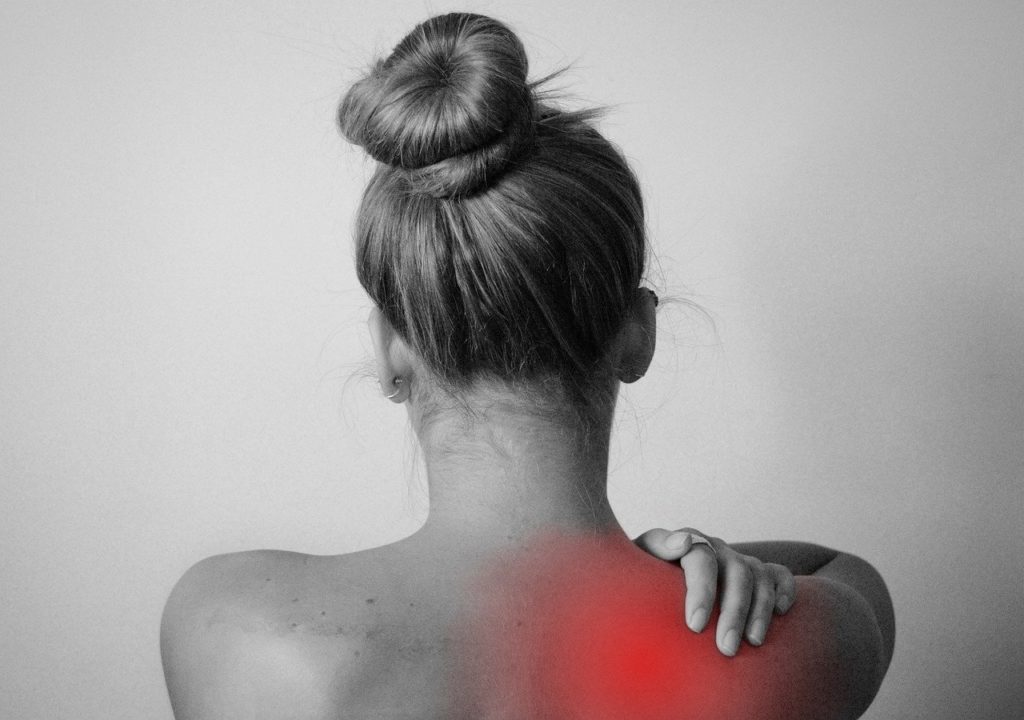
Let’s use back pain as an example. Different healthcare professionals will likely look at your back from different perspectives. Western medicine is primarily concerned with the structure of the body. A western medical practitioner, like a doctor or Physical Therapist, may examine the muscles, joints, or nerves in your back to determine the cause of your pain. Eastern medicine, like acupuncture, is primarily concerned with energy or chi. An acupuncturist may evaluate the flow of chi through your body to determine the best treatment for pain. Zero Balancing bridges western and eastern medical thought. ZB practitioners see people as having two bodies; a structural body and an energy body and focus on the relationship between the two. So a ZB practitioner will evaluate the relationship between your structure and your energy to determine the cause of your back pain. 

Many years ago a colleague came in for a ZB session. She had never received ZB before and was curious. During the session I noticed an imbalance between the structure and energy in her low back area. It responded nicely to the ZB techniques. After the session, she expressed amazement that her back no longer hurt. It turned out that she had chronic back pain, information she had not shared with me prior to the session. She said that through the years, she had worked with “the best of the best” Physical Therapists in the city, but she still had the pain. She was pleasantly surprised when the session addressed both her curiosity about ZB and her chronic back pain!

While I was delighted the session had helped her back, my interpretation of her experience was simply that the pain must have been caused by an imbalance between her structure and energy, at least in part. And because the ZB directly addressed the imbalance, her symptom went away. The cause of the problem had been taken care of, like fixing the ignition would take care of that car that wouldn’t start. 

The same approach can be applied to all of the problems mentioned above. Zero Balancing can be very effective for troubles in your body, emotions, mind or spirit if those troubles are caused by an imbalance between your structure and energy. 

In my experience, some situations and problems are more likely to cause an imbalance between body structure and body energy. These situations often result from experiencing trauma of both a structural and energetic nature. One example would be trouble that started during a particularly stressful period in life, like a car accident after losing a loved one or going through a divorce. In general, trauma of any sort impacts both our structure and energy. 

Is it worth trying a ZB session or two to find out if it can help? The answer is usually yes, especially for problems that have been around for a long time. Give it a try!

How to Talk about Zero Balancing

Clients often tell me they struggle with how to talk to people about Zero Balancing (ZB). They love receiving the sessions and want to share with friends and family but don’t know what to say. A friend asks, “How does it work?” or “What does Linda do during the session?” and my clients say they don’t know how to respond. 

Here are some tips and ideas!

First, take yourself off the hook. You can’t be expected to know what I’m doing, unless you are a Zero Balancing practitioner. And even then, you’ll miss the fun if you spend your ZB  session figuring out what I’m doing instead of relaxing and enjoying yourself. So please don’t expect yourself to be able to speak to my experience giving a ZB. 

You are, however, an expert at your own experience. No one knows your experience better than you! So start there. Your authenticity is a powerful communication tool. 

You may wonder how sharing your own experience can answer your friend’s questions. 

Think about what your friend may actually be asking when they ask how ZB works. Most of us are interested in some basic information when considering bodywork sessions for the first time or with a new practitioner. It’s normal to want to know: Will it feel good? Will it help me? Will I be safe? 

These are universal human concerns and are, quite possibly, what you yourself wondered before you tried Zero Balancing. Often, we are not fully aware of these specific concerns. So we ask what it is or how it works. Or we ask if it’s similar to something we already know about. 

When a potential new client asks me what Zero Balancing is or how it works, I answer their spoken question and also the unspoken questions listed above. By talking about how ZB may help, how good it feels, how experienced I am, and how much care I bring to each session, I am hopefully answering both the spoken and unspoken questions. 

When you share your own experience, you may be answering the unspoken questions and possibly the most important questions. You are sharing that it feels good, that it’s helping you, that you feel safe. 

So what details might you share about your own experience? 

One possibility is to share how you feel during the session. You are lying on a soft and comfortable treatment table. How does my touch feel to you? Good? Safe? Gentle? Comforting? Calming? 

Another option is to think about how you feel when you first sit up after a ZB session. When you first stand up. After you’ve walked a bit. Now see if you can come up with a few words that describe how you feel. Here are some words clients have used to describe how they feel  after a ZB session: 

Grounded. Light. Less pain. No pain. Calm. Taller. Serene. Clear. Happy. Better. 

Do any of these words fit your experience? If not, perhaps there are other descriptions you can share about Zero Balancing. 

Are the sessions helping you? Without sharing personal details about why you are receiving Zero Balancing, you can describe ways you know the sessions are helping you. For example: “My pain is better.” “I’ve been able to get back to gardening.” “I’ve started writing again.” “I’m more relaxed.”

Lastly, you can refer your friend or family member to my website Lindawobeskya.com for descriptions of how I work and links to a podcast and articles on Zero Balancing click here. Another resource is the Zero Balancing website click here for more information. There are 2 excellent books on Zero Balancing. Inner Bridges by Dr. Fritz Smith, the developer of ZB, and Zero Balancing by John Hamwee.

Balance Change

How’s your life going these days? Does managing change feel like a balancing act? We might all recognize that feeling of being off balance initially when something changes in our lives. And given the numerous changes over the past year, feeling off balance has become a way of life for many of us. If we view changes in our lives through the lens of Zero Balancing, any occurrence that creates change is a fulcrum.  In a Zero Balancing session, each technique you experience is a fulcrum. What happens when you receive a fulcrum? As the practitioner, every technique I use is called a fulcrum. I create a fulcrum by applying traction to your legs or gentle pressure on your ribs. And then I stay still. Because the default of the body is motion, your body responds by changing and reorganizing around my stillness. You go into what is called a working state. The pattern that existed before the fulcrum has been affected and is shifting. You are in process, in movement. The process you are experiencing is inherently unstable because things are moving and changing. My job as a practitioner is to stay grounded, stable and present with you, while not attempting to influence or help your process. Your body knows just what to do and will, over the next several hours, naturally move to its highest state of health. The best course for each of us to follow is to witness what’s going on and to allow the process to naturally progress.  

Taking a broader view, any change can be seen as a fulcrum. Think about a time when things changed in your life. It might have been a change initiated by you, a change initiated by another that affects you, or a change initiated by a societal or external event. Perhaps you got a new job or started or ended a relationship. Or perhaps several things changed at once, such as the world entering a global pandemic. Think about how “in motion” things felt, how your life changed, evolved, and finally settled down into a new pattern. You went into a working state and perhaps are still in a working state, as so many of us are with regard to the pandemic. If you can identify this and can name it, the process can be easier to navigate. Expecting yourself to feel unaffected by big fulcrums is unrealistic. It’s natural to go into a working state, to feel in motion, to feel less stable, after a big fulcrum. 

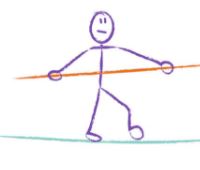
Even though the experience of change and evolution during a working state is normal, it may still be a very challenging time!! How do we navigate the period of instability that naturally occurs after a fulcrum? Imagine standing waist-deep in the ocean. There’s a way that we can learn to ride out being in flux, responding to external forces, and keeping our balance on an unstable surface. 

If you find your life has gone into a working state, Zero Balancing sessions can help! Each ZB session helps to ground and center you. Multiple sessions over time help to build a deeper stability so when things get rocky, your world doesn’t get rocked so deeply. When faced with big life events, such as the pandemic, job changes, marriages and divorces, or other life transitions, recognizing you are in a working state can change your perspective. Zero Balancing sessions can help you with grounding, centering and stability so you can ride the wave until your life settles into its new pattern.  

TLC and the Pain Control Toolbox

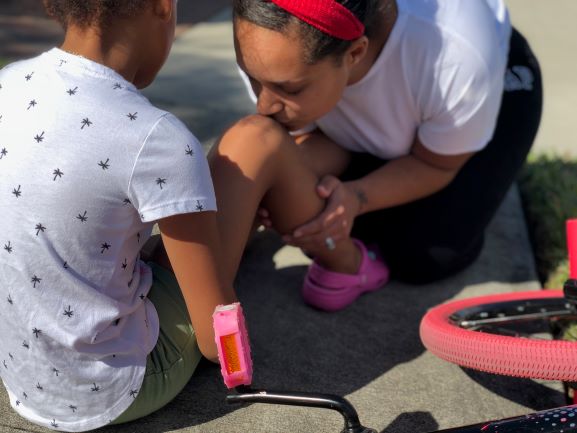
Remember when you were a child and you fell down and skinned your knee? After your knee was cleaned up and the bandaid applied, the thing that helped the most was Mommy or Daddy kissing it and making it better. That tender, loving care, the TLC, felt like the magic potion that healed the pain. 

As we grow into adults and experience a skinned knee or worse, we often forget about the magic potion, the TLC. But it hasn’t lost its power. 

In my many years of practice as a Physical Therapist and Zero Balancing practitioner, I’ve worked with hundreds of people who are in pain. Some for a few months and some for several years. And I’ve observed, without exception, that when clients consciously choose self-care and pain management, a healing event has occurred. The trajectory of their healing path changes and moves upward towards well-being. This self-administered TLC has the same curative power as the kiss your knee received as a child. 

What’s the explanation for this phenomenon? This is my hypothesis: the TLC, the attention and care in response to pain, changes the energetics of the situation. Let me explain. As a Zero Balancing practitioner, I see people as consisting of both structure and energy. The structure is everything in the body that can be seen, like bones and muscles and blood. The energy is everything in the body that is unseen, like thoughts and memories and vitality. Structural issues are usually the focus of western medicine and energetic issues are usually the focus of eastern medicine. Zero Balancing bridges western and eastern medical thought by addressing the relationship between your structure and your energy, by seeing people as both structure and energy. From this perspective, when you skinned your knee as a child, your structure was injured. Your skin was abraded, you bled, your nerve endings signaled injury and pain to your brain. The kiss, the TLC, was an energetic exchange. The love conveyed by the kiss was as necessary to your healing process as cleaning and covering the wound. 

It’s been my observation that as adults, we often forget about the TLC, this energetic aspect of healing. Or we think to offer it to others but not to ourselves. Some introspection may reveal why the value of self-TLC has fallen through the cracks. I suspect the reasons are as individual as each of us. And if you’re in miserable pain, the “whys” are less important than the alleviation of your suffering. What’s important is adding the TLC component to the treatment approach.  

This is one reason I work closely with my clients to help them create a Pain Control toolbox.  The toolbox we are most familiar with is the one in the garage or utility closet. It may contain a hammer and a screwdriver and a variety of other tools. Often the garage toolbox gets filled as the needs arise. You want to hang a picture so you buy a hammer.

A Pain Control toolbox is analogous to the toolbox in your garage to some extent. When pain occurs, most of us have not bought the tools ahead of time. It’s human nature. Many of us do nothing, hoping the pain will just go away. That’s human nature too. 

And sometimes the pain does just go away. That’s great! If it doesn’t, we may search the Internet or ask a doctor or PT what the best medication would be, or whether heat or ice is better. We are looking for tools. From my perspective, even this act of seeking tools to help the pain is TLC. So you have already started the magic. 

Another aspect of the TLC is filling your Pain Control toolbox with tools you like. While simple, this is a powerful statement. Think about the last time you felt cared for by someone. It’s likely they said or did something you liked. If you put a heating pad on a sore back muscle, on a structural level, the heat may help the muscle to relax. If you really like heat and feel comfy and warm in a comfortable chair with the heating pad, it seems to work even better. That, along with the fact that you thought to use a heating pad, and gave yourself the time, is the TLC part. You helped both your structure and your energy. You helped all the parts of yourself. 

The next article will contain ideas and strategies for creating your own Pain Control toolbox. In the meantime, you don’t have to wait to get started. Look around your home and identify the tools you tend to use most often when you’re in pain. These are already in your toolbox. If this article has made you realize you don’t do much for yourself when in pain, you are not alone! And it’s never too late. Search the internet or ask a healthcare professional for some suggestions and try a few things out. Remember, the act of seeking pain remedies is self-TLC. When you find something you like, even if it helps just a little, you’ve started your toolbox. 

The Value of the Pyramid and Parallel Breath Meditations

Have you ever had an experience that has upset you? Or felt anxious about an upcoming academic or medical test or procedure? Or felt stressed about a loved one’s health or the COVID-19 pandemic? If you’re like most of us, the answer is yes, yes, and yes. And you are not alone! 

Like you, I’ve experienced those feelings many, many times. After an upsetting experience, I might find myself feeling agitated for several hours. I may feel uneasy or worried for several days preceding a medical exam or procedure. And the stress of the pandemic has become a constant, always in the background and often front and center. 

Among the many stress management tools available, I have found the Pyramid and Parallel Breath meditations to be particularly helpful because they are both so effective and, once learned, are easy and don’t take a lot of time to do. 

I first experienced both meditations while taking a Zero Balancing (ZB) class. The ZB class started, and still starts, each day with creating a Pyramid and breathing Parallel Breaths. Sitting quietly and guided by the teacher, these meditations helped me feel more present, attentive and enlivened, which enhanced my class experience and made learning easier and lots of fun. I’ve often had helpful insights about myself or my Zero Balancing practice during these meditation sessions. Once I learned how to do these meditations, I realized I could use them on my own outside of class, individually or together, to help me in a number of different situations. 

For example, the Parallel Breath meditation helped me many years ago when I worked as a Home Care Physical Therapist. I had been assigned a new patient and was to begin his treatment in his home. About 5 minutes into the Physical Therapy evaluation process, I asked him if he had any pain. This was a standard question asked of all new patients. In response, he began to yell at me. He got up and walked through his house for about 15 minutes, screaming at me the whole time about his dissatisfaction with his prior medical care. While I knew his anger wasn’t personal and my heart went out to him for his frustration and pain, it was very upsetting to be on the receiving end of all that rage. I was still shaken when I returned to my car. My next patient appointment was in 15 minutes and I needed to compose myself. So I sat there in my car and breathed Parallel Breaths for about 3 minutes. It helped me to quiet and organize myself internally so I could drive safely and be professional, calm and caring with my next patient. 

The everyday usefulness of the Pyramid meditation was demonstrated many years ago when I taught a course on Complementary Medicine to graduate Physical Therapy and Nursing students at Simmons College in Boston, MA. Because the 3-hour lecture took place at 5pm on Wednesday evenings, the students in these arduous training programs usually arrived tired from a long day in the middle of a week of long days. I began each class with a Pyramid meditation. As we moved through the meditation, I could feel the environment in the room shift. Many students told me how much they looked forward to the meditation each week, how it calmed and focussed them, and especially helped them midweek. One of the students shared that when she spent her weekends at her parents’ small, family-filled, noisy city apartment, she created a pyramid over her desk to help her focus on her studies. And it worked! 

I also use the Pyramid meditation when I’m hoping an upcoming event will go smoothly or successfully. I create a pyramid over my experience prior to travelling, either the night before or the morning of. I invite in all those things I think would be helpful, such as a well-rested and alert airplane pilot, kind fellow passengers, a smooth experience going through security, arriving at my destination with all my luggage. Likewise, I create a pyramid over my Zero Balancing class the night before I teach as well as before the ZB classes I take. I’ve created pyramids for friends, family, students and clients, at their request, prior to surgeries, medical procedures, the GMATs, whatever they may feel anxious about. 

Would all these events go smoothly without a pyramid meditation? I don’t know. I do know that creating a pyramid in these instances helped me to feel better in the moment, conveyed my caring in a concrete way to others, and most often, the desired outcomes occurred. As my grandmother used to say…”It couldn’t hurt!” 
Are you curious to experience a pyramid and parallel breath meditation? Information about weekly live guided meditations as well as recordings of past meditations are here. Join us! 

Research Study Measures Zero Balancing Effects on Stress

Feeling stressed? Zero Balancing can help!

For many of us, these are the most stressful times we have ever experienced. Whether it’s the changes in our daily lives caused by COVID-19, the fires and poor air quality here in the San Francisco Bay area, the state of our country, or the state of our world, we are being called upon to manage a veritable avalanche of stress. With this much stress, our autonomic nervous system, the nervous system that regulates our heart rate, blood pressure, and many other basic body functions, can get stuck in a high alert response. This high alert, AKA fight or flight, is our body’s way of responding to both a real or a perceived threat. Not only do we feel very uncomfortable under this much stress, it’s not good for us. The unhealthy consequences of stress are well documented and include lowering our immune system’s ability to fight infection. To state the obvious, when in a pandemic, a strong immune system is vitally important. And so is reducing stress. 

Zero Balancing can help. Research on Zero Balancing is revealing how a 30 minute session can decrease stress by 61%. Researchers at the NeuroSynchrony Institute in Austin, Texas used polygraph (lie detector) technology to measure stress levels in people who were receiving a ZB session. This first study on the effects of Zero Balancing showed a 61% reduction in stress in those receiving ZB compared to a 12% reduction in the control group; people who lay quietly for 30 minutes without receiving ZB. Read more about this research here:  

https://zbtouch.org/2017-nsi-research-results-and-overview/

While more research is needed, these results are impressive. The research is confirming what I see in my clients every day and what I’ve experienced myself after receiving a ZB. We feel better after the session than we did before. We feel more relaxed and more ready to face the world. For those who use Zero Balancing for pain relief, the relaxation may seem like a side effect, albeit a good one! In truth, Zero Balancing sessions can be used to great advantage purely for stress relief and relaxation.  

Self care to manage stress is more important now than ever. Are you yearning to feel more relaxed? Consider adding a biweekly or monthly Zero Balancing session to your self care regimen! 

What’s better….heat or cold?

When speaking with a client about their long-time pain or recent injury, I usually offer many different ideas to help them create a Pain Control Toolbox. Therapeutic use of thermal modalities like heat or cold is a common and readily available tool. One of the most common questions I am asked is which one will work better. If you search Google to ask this question, multiple websites will appear with information and guidance. While the decisions are sometimes straightforward, in my experience it can be helpful to consider several unique factors not addressed in many online articles. 

“I hate cold.”

Some people really don’t like cold. Some people really don’t like heat. I’ve observed a basic human trait over the years and this is true of myself as well…we usually don’t continue things we don’t like! When it comes to continuing one’s self care, this becomes very important. If your back hurts every time you garden, you may have been advised by your doctor or Physical Therapist to ice your back right after gardening. If you hate using ice, it’s not likely you’ll continue this potentially very helpful practice long term. However, using heat will help as well and if you like heat, you’ll be developing a routine that may spare you a lot of discomfort for many years. Using the modality you prefer, even if it’s not identified as the “best” choice, will be better than doing nothing at all.  

There are certainly a few exceptions. For an acute injury, like a sprained ankle, it’s very important to use ice and avoid heat for the first 48-72 hours. However, even if you hate cold, in this instance, you only need to use it for a short time. 

So in this example, the answer to WHAT’S BETTER…HEAT OR COLD? is…whichever one you like best! 

“It doesn’t help. The pain keeps coming back.”

Many people stop using heat and cold because it doesn’t keep the pain away. While it may feel better during the application or for a short time after, the pain comes back. You conclude it didn’t help and therefore wasn’t worth the time. This can be especially true for people whose pain has become chronic. 

To understand the reason the pain comes back, it’s helpful to think about the nature of tools. Tools are often limited to a particular use. A hammer, for example, is very useful if the task involves nails. We know the hammer will not help to tighten a screw so we don’t usually choose a hammer from the toolbox for jobs involving screws.  

If we look at heat and cold as tools, here are the “nails” for these particular “hammers.” Thermal modalities work by causing a temporary change in local blood flow and, in the case of ice, a temporary slowing of nerve conduction, meaning the message from your muscle takes longer to get to your brain, so the pain hurts less. The key word here is temporary. That defines the limitations of these particular tools. From this perspective, it might be anticipated that the pain would return.  

“If the pain keeps coming back, why should I bother to use it?”

One big reason is you feel better for the time the heat/ice is on! Let’s use heat as an example. If your pain was 6/10 and for the 20 minutes while using heat, your pain drops  to 2/10, that’s a much more enjoyable 20 minutes. The heat may also feel soothing and relaxing, which also helps pain. And if you use heat multiple times during the day, that’s potentially a much more enjoyable day. 

Another important benefit is what I like to call  the TLC effect. The TLC effect is one explanation for why Mommy  kissing your skinned knee takes the pain away. From an integrative medicine perspective, this loving attention is a powerful healing factor. When we apply ice or heat, we are in essence giving ourselves TLC. The overall healing effect of this simple act should not be underestimated. In my years of work with people with chronic pain, I’ve witnessed people transforming the quality of their lives by implementing consistent TLC, even something as simple as  using a heating pad twice a day. 

For information on using heat and cold as well as do’s and dont’s, this is a good article.  

https://www.healthline.com/health/chronic-pain/treating-pain-with-heat-and-cold#applying-heat-therapy