
Category Archives: Clients

Does pain always originate in your body?

When pain arises, our first instinct is to seek its origin within our physical body. This is logical if the pain follows an event like a trip, fall, or bump against furniture. Even without a clear precipitating incident, we typically assume the root cause is a physical ailment, leading us to consult a doctor whose focus is often solely on the body. However, pain is frequently multifaceted, and treatment may be less effective if all underlying causes are not addressed.

The prevalent Western medical view often posits the physical body—be it bones, joints, organs, or the nervous system—as the sole origin of all pain, even chronic pain. However, based on my experience, the roots of pain, particularly long-standing pain, are frequently complex and can stem from non-physical sources.

Imagine a plant with a deeply intricate root system. This plant is the pain you feel, while its roots illustrate the complicated interaction between the structural and energetic origins of that pain.

As an example, when I was a dancer, I broke a bone in my foot. Even though the bone healed completely after about eight weeks, the pain persisted for several months. I consulted five different doctors. Four of them offered solutions ranging from surgery to advising me to quit dancing. The fifth doctor admitted he didn’t know the cause, but suggested I continue dancing, thinking the source of the pain might eventually become clear.

All of us—and I am including myself—focused entirely on the structural problem. This single-minded focus is an understandable consequence of medical training and the conventional view of the body. Nevertheless, we were all making the same fundamental assumption: that the pain had only a single root, like a stubborn plant.

Desperate, I turned to acupuncture, which introduced a new perspective on the root of my pain. The acupuncturist’s treatments gradually led to the pain dissipating, along with several other health and emotional issues I had been struggling with.

Upon reflection, I came to understand that while the initial trauma was a fractured foot, the pain I was feeling had more complex origins. The injury halted my “running,” both physically and metaphorically, from various issues in my life. The pain was multi-faceted, stemming from structural concerns with my bones and muscles, as well as energetic aspects tied to my emotions, thoughts, and spirit.

To fully resolve the symptoms, I needed treatments that addressed the full spectrum of causes—both structural and energetic. For the fracture, my foot was immobilized. Then, I had physical therapy to address the muscles that became tight and weak from the immobilization. Finally, acupuncture was necessary to treat the energetic imbalances that both predated and were caused by the fracture. Zero Balancing would have helped as well, had I known about it. 

Pain is a holistic experience. It is often more than just a physical sensation; it’s a comprehensive experience that impacts every area of our lives. Managing it often demands time and financial resources, diverting them from other uses. A change in physical function can alter relationships, perhaps necessitating care from others or limiting our ability to support those who rely on us.

The origins of pain can be diverse, encompassing a spectrum of physical and energetic causes across the body, emotions, mind, and spirit. For treatment to be effective, it must address the underlying cause. While structural issues often require structural intervention, if the roots extend beyond the physical, consider holistic treatment approaches as well.  
Zero Balancing, Safety, Relaxation, and the Nervous System

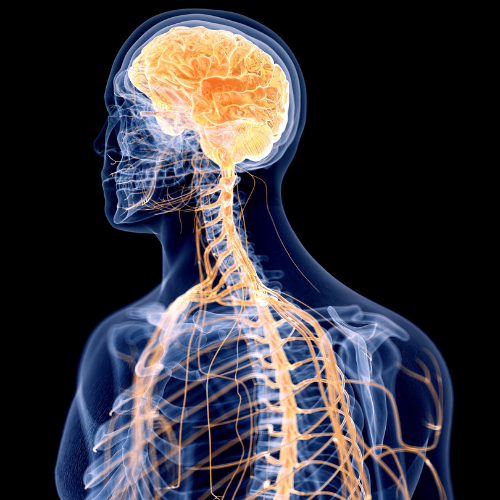
The most frequent remark I hear after a Zero Balancing (ZB) session is, “I feel so relaxed!” Why is ZB so relaxing? ZB incorporates several elements that create an experience of safety which in turn, quiets our fight-or-flight response. Dr. Stephen Porges, a leading researcher on the effects of stress and trauma on the nervous system, emphasizes the necessity of establishing safety for the nervous system to regain balance. In his article, Polyvagal Theory: A Science of Safety he stresses the importance of safety for healing, growth, and healthy social interactions. The continuous interplay between fight-or-flight reactions to threat and relaxation responses when safe is regulated by our autonomic nervous system. How exactly does ZB heighten these feelings of safety?

When we think of the nervous system, we often think of the voluntary, or somatic, nervous system, which allows us to sense and interact with our surroundings—for example, when you intentionally wiggle your toe.  However, vital functions—like your heartbeat, the movement of food through your digestive tract, and blood pressure regulation—are managed by the involuntary, or autonomic, nervous system.

The autonomic nervous system consists of two parts: the sympathetic fight-or-flight and the parasympathetic rest-and-digest systems. The ideal state is a balance where these two systems activate as necessary and then return to equilibrium.

When we perceive a threat, whether real or imagined, the sympathetic nervous system immediately jumps into action, preparing us for survival by revving us up to either fight or flee. Once the threat is gone, the parasympathetic nervous system steps in to restore balance.

With trauma or prolonged stress, the sympathetic nervous system can get stuck in the “on” position which prevents the parasympathetic nervous system from effectively promoting calm. Establishing a sense of safety is crucial because it removes the stimulus that keeps triggering the sympathetic nervous system, allowing the parasympathetic nervous system to perform its regulatory function.

Every Zero Balancing (ZB) session is designed with features that cultivate a profound sense of safety, beginning with the unique quality of ZB touch. ZB practitioners receive extensive training to consciously and simultaneously connect with the whole person—both the physical body and the individual living within it. Recognizing that each person, while structurally similar, is a unique being, ZB touch meets you exactly where you reside in your body. This creates an experience of being fully seen and held with deep respect, free from any practitioner-held expectations about how, when, or how much you should change. The session offers a feeling of complete acceptance and non-judgment. 

Second, Zero Balancing touch maintains a clear boundary, which is vital for respecting the client’s personal space. This distinct boundary is particularly crucial for individuals with a history of trauma. Communication through touch is instantaneous and always true. When conscious, respectful  touch connects with our deepest selves with a clear boundary, we feel seen, met, and accepted. Instinctively, we know we are safe and can relax. 

Lastly, Zero Balancing sessions follow a protocol. Every session follows the same pattern using primarily the same techniques. After a few sessions, the client knows what to expect. This predictability decreases the need to monitor the practitioner or stay guarded, freeing the client’s attention to turn inward and relax.

In this environment of safety, the client’s sympathetic nervous system has a chance to down-regulate. Pilot studies performed by the Neurosynchrony Institute have demonstrated this phenomenon. To read these studies go to Pilot Study with Neuro Synchrony Institute (2015 & 2017) – Zero Balancing Touch 

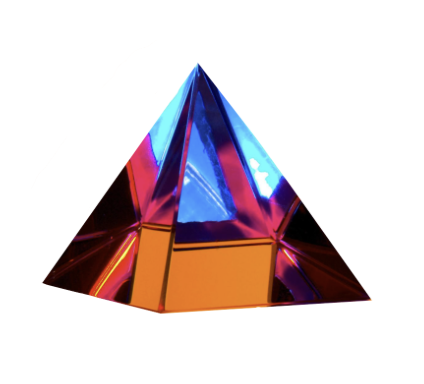
Let’s Revisit The Value of the Pyramid and Parallel Breath Meditations

In today’s often stressful and uncertain world, personal anxieties are easily amplified. Whether it’s concerns about a medical test, a loved one’s health, or job pressures, these feelings are common and understandable. This was true when this blog post was initially written during the pandemic, and it remains equally relevant now. If you’re experiencing such emotions, know that you’re not alone. Among the many available stress management techniques, I’ve personally discovered the Pyramid and Parallel Breath meditations to be remarkably effective. They are straightforward to learn, require minimal time, and can be practiced in nearly any setting.

I learned both meditations while taking  Zero Balancing (ZB) classes. Each day the class began with creating a Pyramid and breathing Parallel Breaths. Sitting quietly and guided by the teacher, these meditations helped me feel more present, attentive and enlivened, which enhanced my class experience and made learning easier and lots of fun. Once I learned how to do these meditations, I realized I could use them on my own outside of class, individually or together, to help me in a number of different situations. 

The Parallel Breath meditation proved invaluable during my time as a Home Care Physical Therapist. I recall one instance where a new patient began shouting about five minutes into our session, expressing his dissatisfaction with prior medical care. Although I understood his anger wasn’t directed at me personally, being the recipient of such rage was incredibly unsettling. Still shaken after returning to my car, and with my next appointment in just 15 minutes, I needed to compose myself. I sat and practiced Parallel Breaths for about three minutes. This helped me to quiet and organize myself internally, allowing me to drive safely and approach my next patient with professionalism, calm, and care.

The usefulness of the Pyramid meditation was evident when I taught a Complementary Medicine course to graduate Physical Therapy and Nursing students at Simmons College in Boston, MA. These demanding programs meant students often arrived tired at the 5 pm Wednesday evening lectures. I started each three-hour class with a Pyramid meditation, and I could feel the atmosphere in the room change. Many students expressed how much they anticipated this weekly meditation, finding it calming and focusing, particularly mid-week. One student even shared how she created a pyramid over her desk to concentrate on her studies during noisy weekends at her parents’ city apartment and it proved effective.

I use the Pyramid and Parallel Breath meditations to promote smooth and successful outcomes for upcoming events. For instance, before traveling, teaching, or undergoing a medical procedure, I create a pyramid over the experience and invite in beneficial elements.

When traveling, I visualize a well-rested pilot, kind fellow passengers, an efficient security process, and my luggage arriving safely. Similarly, I create a pyramid over my Zero Balancing classes the night before I teach, and also before I attend ZB classes, envisioning safe, stimulating and inspiring environments that optimize learning.

I have also created pyramids for friends, family, students, and clients, at their request, to alleviate anxiety related to surgeries, medical procedures, GMATs, or other stressful situations.

Would all these events go smoothly without a pyramid meditation? I don’t know. I do know that creating a pyramid in these instances helped me to feel better in the moment, conveyed my caring in a concrete way to others, and most often, the desired outcomes occurred. As my grandmother used to say…”It couldn’t hurt!” 
Are you curious to experience a pyramid and parallel breath meditation? Recordings are available here. Try it! 

Revisiting A ZB Perspective for Your Life


Let’s revisit the ways Zero Balancing (ZB) principles can help you in your everyday life. Specifically, how applying the concepts of fulcrums and working states can help you cope with change and uncertainty. The term “fulcrum” is used to describe each technique used during a ZB session. A fulcrum is a catalyst for change. Life choices and world events can be viewed as fulcrums that create change, whether chosen or imposed. 

A fulcrum enables movement, much like a stationary board becomes a lever when placed on one. When your ZB practitioner places and holds a fulcrum for a few seconds, your system responds by initiating motion. In response to the practitioner’s stillness, your internal world begins to reorganize and change. This process, known as a working state, is an in-between phase—between your previous patterns and the new ones that are emerging. Each fulcrum, working state, and new pattern are integral to an organic process that naturally progresses you toward improved health.

Life events, like job change, moving house, getting married, a pandemic, can be viewed as fulcrums. Each acts as a catalyst for change, leading to a subsequent “working state.” In certain situations, we actively place a fulcrum, much like a Zero Balancing practitioner. We choose to make a change. In others, we are the ones on the ZB table, receiving the impact of the fulcrum. In both instances, whether change has been chosen or imposed, a working state follows. This in-between state is inherently unstable because things are in motion; things are changing. From this perspective, it’s perfectly normal to feel stressed, for things to feel challenging or extremely uncomfortable. 

Understanding fulcrums and working states can help you understand and cope with your experience. If you have not initiated the change, you are receiving the fulcrum. You have not chosen this experience and yet here you are. Recognition that you are in a working state can help you feel more stable, even if things are still in motion. The stress you feel is a normal, if uncomfortable, response to change. You can anticipate that once the new pattern is established, you are likely to feel better. You realize that you are experiencing a normal part of re-orienting around a change and may be better able to tolerate the discomfort as a result. It may not feel easy, it may feel easier! 

It can be equally helpful to understand fulcrums and working states when you initiate the change. Here, you are like the practitioner. You have placed the fulcrum and you can view the reactions of those around you as their working state. Like a ZB practitioner, your job is to stay present and remain still. Those around you are reorganizing around your fulcrum. Their reactions are a normal response to the change you have created, their discomfort is the normal discomfort of being in a working state. This may free you from feeling you must argue or justify your decision. If you can stay still and present, their reaction often winds down soon and you can both move forward into the new pattern. 

Try looking at experiences in your life as fulcrums and working states. I hope it helps!

Let’s Get Organized…On The Inside!

Have you been feeling discombobulated? Scattered? Disorganized on the inside? The continuum from order to disorder and back to order is a universal experience. Most people prefer feeling grounded and centered. Zero Balancing (ZB) is a particularly good tool for feeling more of both! ZB organizes our inner and unseen world. It organizes our field. What, you may ask, is a field? 

A field is an area that has properties we can feel but not see. This is a construct used often in physics and mathematics that has applications here. For example, think about how you feel when you walk into a church or synagogue. It feels different than outside. The sanctuary in the building feels different than the outer hallways as well. We can feel it the instant we step inside a place of worship. Another example is the moment you step onto the beach or into a forest. Now imagine walking into a busy restaurant or supermarket. What you are feeling is the field of each particular area. It’s a different feeling because those fields have different properties. We can’t see the fields but we sure can feel them. 

We all can feel fields. Think about how your home feels when it’s organized vs when it’s cluttered. After cleaning, the transition from disorganized to organized is both visible and palpable. It looks better and feels better. It feels better because the field in your home has ben organized.

We each have our own internal field that cycles from less organized to more organized. It’s a natural process. For some of us, our baseline is having a disorganized field. We feel scattered and ungrounded most of the time. Our field cycles from less disorganized to more disorganized and never quite makes it to organized. Even a small perturbation can throw us way off center. 

An organized field feels better than a disorganized field. A ZB session organizes our field. This is one of the reasons Zero Balancing sessions help. We are more grounded. More stable. And as we receive additional sessions, our internal field remains organized for longer and longer periods of time. Our baseline stability improves. It takes less to throw us off center and becomes easier to regain our footing. 

Is there anything you can do to organize your own inner field? Of course. Our fields often resonate with the field around us. Find a field that’s better organized than your own. Go to a library, a place of worship. Take a walk in the woods, especially the redwoods. Clean or reorganize your home. Spend time with friends who feel grounded and stable to you. Yoga, Tai Chi, and Chi Kung practices help as does meditation. 

Zero Balancing meditations on this website are very helpful. The parallel breaths portion of each meditation is particularly organizing. It’s easy to learn and is something you can do on your own just about anywhere. A few minutes of parallel breaths can organize your field and help your day become easier. 

Try this experiment. Notice how you feel inside before the meditation and compare it to how you feel after. It’s a great way to get organized on the inside!

Thanks for reading!

What are the best shoes for a person with high-arched feet? Part 3

Revisiting this 3-part series, I’ve been helping you to determine the optimal shoe features for your particular foot. Part 3 will look at what shoes may be best for a person with high arched feet. If you missed Parts 1 and 2 you can read them by clicking the respective number. 

Let’s get started on Part 3!

As we learned in Part 1, the foot needs to be mobile early in the walking cycle, for shock absorption and adapting to the ground, and rigid later in the walking cycle, to propel the body forward. 

Your high-arched foot is rigid because of its interlocking bone structure. So you have what you need for the later part of the walking cycle, which is great! Your rigid foot is excellent for propelling the body forward and helping you to take a nice, long step. However, it may be at a disadvantage during the early stages of the walking cycle, when you need flexibility for shock absorption and to adapt to any unevenness underfoot. With insufficient shock absorption, ground reaction forces travel up your leg and can adversely affect your hip, pelvis and back. With insufficient flexibility in your foot on uneven ground, you have a higher risk of falling or spraining your ankle. 

The good news is that the right shoe can make up for the shock absorption and adaptability your high-arched foot lacks. A soft and mobile shoe with added cushion can make a big difference!  

Here are 3 simple tests you can perform in the shoe store to find a soft and mobile shoe. Two of these tests can be used by people with flatter feet as well. However, you will make different choices based on the results! 

Heel Counter Squeeze 

The Heel Counter is the back part of your shoe where your heel sits. 

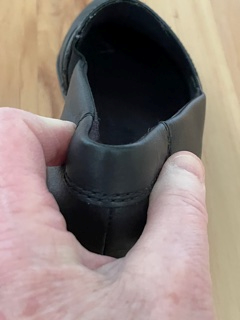
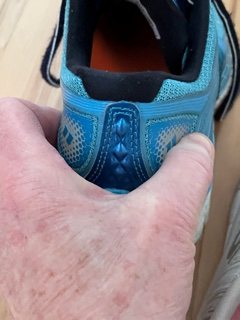
Place your thumb and forefinger on either side of the heel counter. Pinch the sides together. 

best shoes, flat feet, high arch, shoes, sneakers

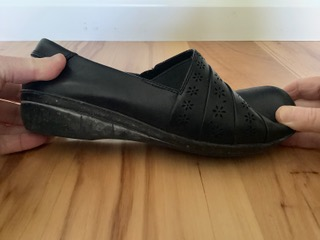
For high-arched feet, a shoe where you can easily squeeze the sides together, like this black shoe, is a better shoe for you.  

What are the best shoes for a person with high-arched feet, best shoes, flat feet, high arch, shoes, sneakers

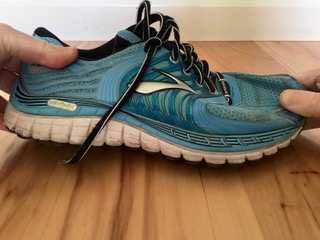
If the heel counter remains firm, like this blue shoe, this is not a good shoe for you. It’s too stiff and rigid. 

Twist Test

Hold the back of the shoe with one hand and the toes of the shoe with the other hand. Try to twist the shoe. 

What are the best shoes for a person with high-arched feet, best shoes, flat feet, high arch, shoes, sneakers

If it’s easy to twist, like the black shoe, it’s a good shoe for you. 

What are the best shoes for a person with high-arched feet, best shoes, flat feet, high arch, shoes, sneakers

If it’s harder to twist, like the blue shoe, it is not a good shoe because it’s too rigid. 

Back of the Shoe Test

What are the best shoes for a person with high-arched feet, best shoes, flat feet, high arch, shoes, sneakers

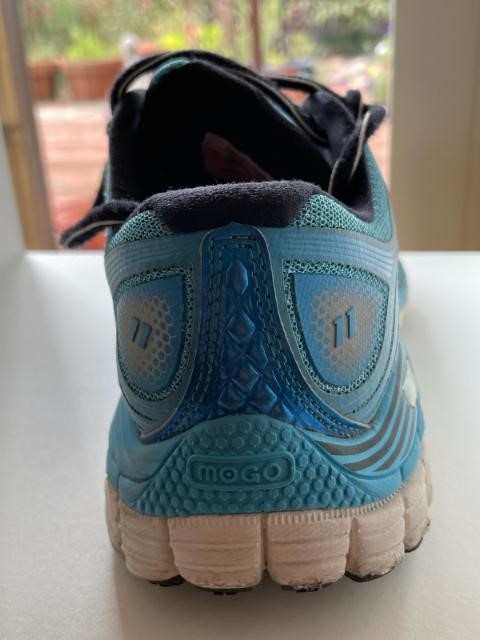
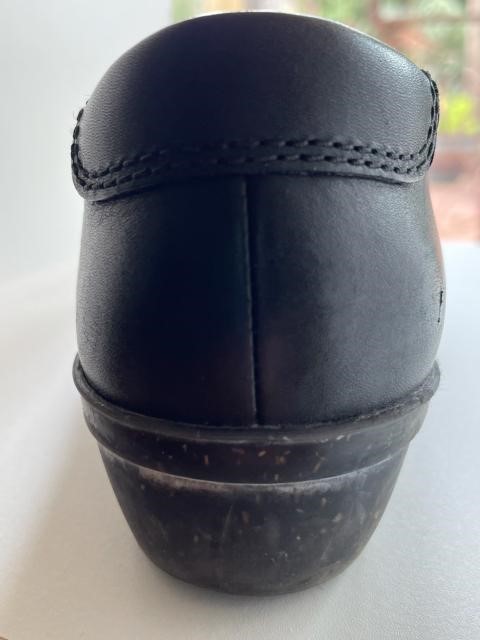
Look at the back of the shoe. The sole should flare slightly outward like the shoe above. This will add stability to the outside of your foot and decrease the risk of twisting your ankle. 

What are the best shoes for a person with high-arched feet, best shoes, flat feet, high arch, shoes, sneakers

Avoid shoes where the sole slants inward, like the shoe above. This is a less stable shoe.

And to add shock absorption, be sure your shoes have plenty of cushioning! 

How much does wearing the right shoe matter? 

It depends. If you are not having any problems with your feet or back or spraining your ankle, it’s probably not important that all your shoes meet the criteria above. However, if you are walking for exercise or having problems, the right shoes may help! 

Thanks for reading!

More on how to talk about Zero Balancing

Wondering about how to talk about Zero Balancing? Want to tell your (family, partner, trainer, PT) about ZB and don’t know what to say? Is your friend asking about Zero Balancing sessions and you don’t know how to answer? You’re not alone! ZB practitioners and clients alike can find it challenging to talk about ZB. Whether we initiate the conversation or want to respond to questions, it can feel difficult to translate our kinesthetic experience into words.

Clients often tell me they begin to talk about ZB and the conversation stalls. If you’ve begun to talk about your ZB experience and it doesn’t seem to be going well, there may be several reasons why. 

One approach is to think about your own goal in talking about Zero Balancing. What do you hope to accomplish with the conversation? Be honest with yourself. If your goal is, for example, to share how much the sessions help you, then just talking about it will meet the goal. Whether the person is able to hear and understand you is secondary. You have shared your experience. 

Many of us aren’t really clear about our own goals. If you read the above, imagining a conversation, and are feeling some vague dissatisfaction, then perhaps your goal was something different or may have been only partially met. If you have some clarity about your desired outcome, it may guide you in deciding what to say or how to say it. 

Let’s look at the two scenarios mentioned above–one in which you initiate the conversation and one in which you are asked. 

What might be a goal when initiating a conversation about Zero Balancing? 

Let’s say your goal is feeling heard while sharing your excitement about your own experience. What response on the part of the listener would make you feel heard? If you are clear about what you are looking for, you’re more likely to know when you’ve received it. 

What if your goal is to help your friend or family member? This leads in a few directions. Will the goal be met if they hear you? If they agree to think about getting a session? If they agree to receive a session? Take into account that we cannot control the responses of our listeners. Is your goal realistic? Might it take several conversations to achieve? Answering these questions may help you in the conversation. 

It can feel trickier if you are asked the question “What is Zero Balancing?” People often tell me that this is where things begin to go awry because they feel they must be able to answer the question as if they were a practitioner. That’s not true. 

You may not know what’s involved in giving a session but you certainly know what it’s like to receive a session. You have clothes on. You lie comfortably on your back. You receive similar techniques in a similar order each time. And it feels good. It’s very relaxing. At the end of the session you wish you could stay lying on the table. Your pain is better. You feel taller. You look forward to coming back. All this qualifies as a very good description of Zero Balancing. 

For more tips and ideas, read my previous blog on how to talk about ZB here

What are the best shoes for a person with flat feet? Part 2

Let’s get started on Part 2!

Remember, during the normal walking cycle, the foot needs to be mobile early in the cycle and rigid later in the cycle. A flat foot is at an advantage here. The joints in the middle and rear of the foot become looser as the arch lowers. A lower arch means a flatter foot. 

When your foot lands on the ground and your body travels forward over your foot, your foot needs flexibility so it can absorb the ground reaction forces and protect your leg and back from these considerable forces. It also needs to adapt to any unevenness on the surface so you can keep your balance. Because a flatter foot is a more flexible foot, in this early part of the walking cycle, you have what you need! Your low-arched foot is mobile and can do a good job absorbing ground reaction forces and adapting to any unevenness on the ground. 

In the later part of the walking cycle, your foot needs to become rigid so you can propel yourself forward. Here is where having a flat foot can be a disadvantage. Your mobile flat foot may have a hard time becoming rigid enough for good propulsion. This difficulty is often the cause of problems like bunions and plantar fasciitis. 

What your foot lacks can often be balanced with the right shoe. If your foot lacks rigidity, a firmer shoe can make a helpful difference. A shoe with support in the right places can help your foot be more rigid when you need it. This type of shoe is sometimes called a “motion control” shoe. It’s controlling your foot’s extra mobility so it can function better. 

How can you tell whether a shoe is supportive in the right ways for your flatter feet? Here are two simple tests you can perform in the shoe store.  

The Heel Counter Squeeze 

The Heel Counter is the back part of your shoe where your heel sits. 

Place your thumb and forefinger on either side of the heel counter. Pinch the sides together. 

If the heel counter remains firm, like this blue shoe, this is a good shoe for you.

If you can easily squeeze the sides together, like this black shoe, 

it’s not a good shoe for you.

The Twist Test

Hold the back of the shoe with one hand and the toes of the shoe with the other hand. Try to twist the shoe. 

If it’s harder to twist, like the blue shoe,  it indicates more support for a flatter foot and is a better shoe for you. 

[Photo of back of twisted black shoe here] 

If it’s easy to twist, like the black shoe, it’s not a good shoe for you. 

How much does wearing the right shoe for your feet matter? 

It depends. If you are not having any problems with your feet, it’s probably not important for every shoe you wear to help control the extra motion in your foot. However, if you are walking for exercise, it would be wise to find a more supportive shoe to help prevent problems. 

And of course, the shoe must feel comfortable! If it’s not comfortable, it’s not a good shoe for you period!

Coming up in Part 3, we’ll talk about the shoe features that help a high arched foot. Thanks for reading!

Staying Stable During Times of Stress

I’ve noticed recently that many of my clients who have come for multiple sessions are experiencing the unexpected benefits of Zero Balancing (ZB). Unexpected because initially they came for help with physical pain. And after several sessions, they are noticing they are better able to handle the normal and sometimes excessive stresses that life can bring. Aspects of their inner and outer lives seem to improve; most notably in their experience of inner stability.

I wrote on this subject a few years ago and it’s worth revisiting, especially given these times of extreme stress. Outer world in turmoil can make our inner world unstable. 

Everyday language has lots of phrases that describe inner world instability. “The rug was pulled out from under my feet.” “You could have knocked me over with a feather.” “I can’t seem to get my legs beneath me.” With so many destabilizing challenges in our lives, having inner stability is critically important. 

Are you familiar with Weebles? A Weeble is a toy that does not fall down. The world outside can tilt and the Weeble may wobble, but it somehow is able to adapt and doesn’t fall down. Weebles are a good example of stability for this discussion. Stability requires maintaining a broad range of adaptability and resilience in response to sometimes extreme external forces. If we have good internal stability, we may wobble but we don’t fall down!

How might we avoid “falling down”? Looking at the physical body, we know that a fall occurs when the person’s center of gravity moves outside their base of support. A wider base is more secure than a narrower base because the center of gravity can move farther without moving outside the base of support.

Try standing on one foot. You feel the wobble as your body experiences a narrower base of support. If you grab a chair you have enlarged your base of support. You may feel your foot making small adjustments as your body adapts to a less stable position. Luckily, the floor won’t move so something in your environment is stable. 

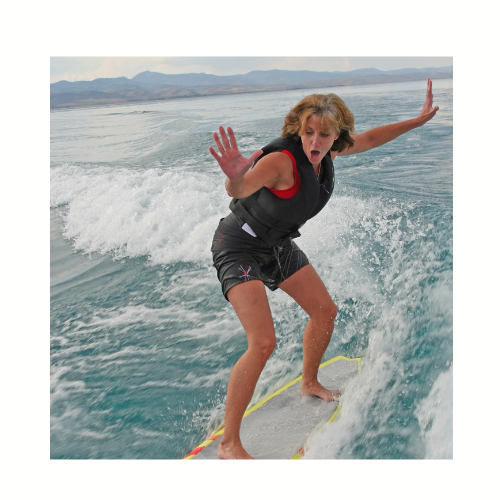
What if the surface you are standing on is both moving and unpredictable, like when surfing? The surfer adapts to this challenging situation by remaining in a stable stance; knees bent and feet wide, low center of gravity and wide base of support. The external instability is constant and outside the surfer’s control. It is the surfer’s inner stability, body position and focus that keeps him on the board. 

Life often resembles surfing and some waves are pretty big. Zero Balancing can help us find that surfer’s stance in our inner world.

Zero Balancing balances body energy and body structure. Loss of inner stability can occur  when joints that function to transmit force or energy become compromised and less able to function optimally. This is quite common and may not even be noticed. If you feel ungrounded or easily knocked down, this may be part of the cause. ZB sessions can restore this function, facilitating the freer movement of energy through our physical structure. Our energy, our essence, can move through and inhabit our bodies more fully, helping us to adopt a surfer’s stance in our inner world. We experience a body-felt sense of increased stability. 

Repeated ZB sessions anchor this energetic balance and we feel it as a kinesthetic experience. Stressful times become easier to manage. While some stressors may never feel easy, having an easier time can be a big help. We may wobble yet we experience more adaptability and resilience. We don’t fall down.  

Inner stability provides an essential tool for navigating a changing, unpredictable and often unstable world. It helps keep us on our surfboards!

What are the best shoes for me? Part 1

Lots of clients have been asking about shoes lately so I thought it might be helpful to revisit the articles I wrote a few years ago about how to determine whether a particular pair of shoes might work for your feet. As we all know, the right pair of shoes can make a huge difference in the way we function during the day. Shoes can be expensive. So why not save yourself time and money by learning a bit more about what your particular foot needs before heading to the shoe store?

In this 3-part series, I’ll help you to determine the optimal features of shoes for your particular foot. Part 1 will look at how your foot is constructed and what’s needed from your foot when walking. Part 2 will talk about what shoes help a person with flat feet. And Part 3 will look at what shoes can help a person with high arches in their feet. 

Let’s get started with Part 1…

When it comes to determining the best shoes in which to invest, I suggest temporarily setting aside considerations of style and belief and looking instead at how your foot needs to function for optimal comfort, whether it is able to function that way based on your unique anatomy, and how your shoes can help or hinder those functions. 

The foot is an absolute marvel of construction. With each step, the foot must adapt to the unique attributes of the surface you are walking on while withstanding large amounts of force. When your foot hits the ground, the ground hits you back. For every action there is an equal and opposite reaction affects our every step. Your foot as well as your entire body is affected by these ground reaction forces with every step. 

In the walking or gait cycle, your foot lands on the ground and remains there as your body travels forward over your foot. Then your heel comes up and you push off to propel yourself onto your other foot. What does your foot need to be able to do while you are walking? 

As your foot lands on the ground and your body travels forward over your foot, your foot needs to be flexible so it can absorb ground reaction forces to protect your knee, hip and back from these forces. It also needs to adapt to any unevenness on the surface. If the ground is slanted, the sidewalk raised or there’s a rock or twig, your mobile foot helps you keep your balance and take this in stride. As your foot prepares to propel you forward onto the other foot, it needs to become rigid. It’s more effective to push off something rigid than something flexible. So with each step you take, your foot needs to be flexible at times and rigid at times. 

Take a look at your feet while you are standing…

Aree your feet flat? Or do you have a high arched foot? Because of the interlocking bone structure in the foot, a flat foot is more mobile and flexible and a high arched foot is more rigid. 

If you have flatter feet, you are in good shape when the foot needs to be mobile in the early part of the gait cycle. Your foot can absorb ground reaction forces and adapt to the uneven surfaces. However, when your foot needs to be rigid, you may run into trouble. 

If you have higher arched feet, you are in good shape when the foot needs to be rigid. You’ll be able to push off and propel yourself forward onto the other foot very well. However, your foot may be too rigid to effectively absorb ground reaction forces and adapt to uneven surfaces. 

Shoes can help give your foot what it’s missing; more rigidity for a flatter foot or more shock absorption for a high arched foot. 

Coming up in Part 2, we’ll talk about the shoe features that help a flatter foot. Thanks for reading!